






What's Happening?
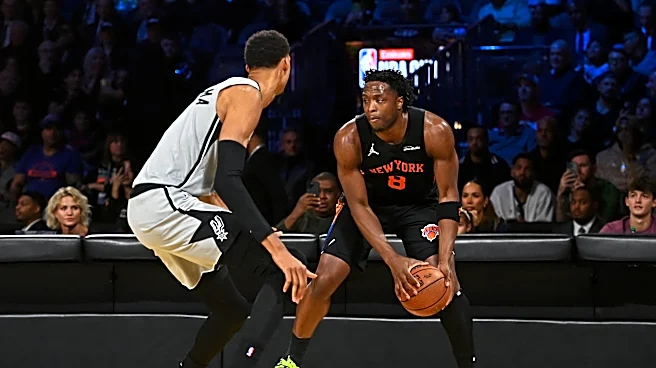
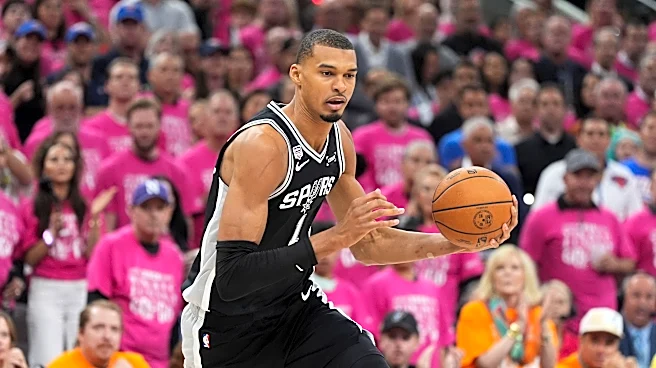
Jalen Brunson's performance in the NBA Finals is reshaping perceptions of small guards in the draft landscape. Standing at 6-foot-2, Brunson has been instrumental in the New York Knicks' success, scoring a team-high 30 points in a recent game against
the San Antonio Spurs. His ability to perform at a high level on basketball's biggest stage is challenging the prevailing draft philosophy that favors larger guards. Brunson's success is prompting a reevaluation of the potential of smaller guards, highlighting their ability to contribute significantly despite size disadvantages. This shift in perception could influence future draft decisions and the evaluation of guard prospects.
Why It's Important?
Brunson's impact on the draft narrative is significant as it challenges the trend of prioritizing larger guards. His success demonstrates that smaller guards can excel in the NBA, potentially opening doors for other talented players who may have been overlooked due to their size. This shift could lead to a more diverse range of guard prospects being considered in future drafts, altering team strategies and player development approaches. Brunson's performance serves as a reminder of the importance of skill, basketball IQ, and adaptability, qualities that can outweigh physical attributes in determining a player's success.
Beyond the Headlines
The changing perception of small guards could have broader implications for the NBA, including shifts in team dynamics and playing styles. As teams become more open to drafting and developing smaller guards, there may be an increase in fast-paced, guard-centric play. This could lead to a more dynamic and versatile style of basketball, with teams leveraging the unique strengths of smaller guards. Additionally, Brunson's success may inspire young players who do not fit the traditional mold, encouraging them to pursue their basketball aspirations with confidence.