


What's Happening?
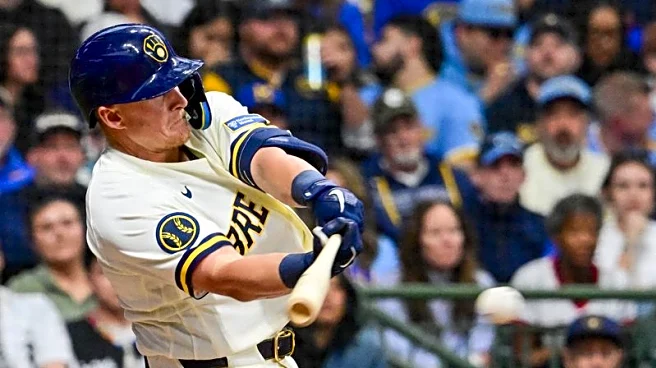
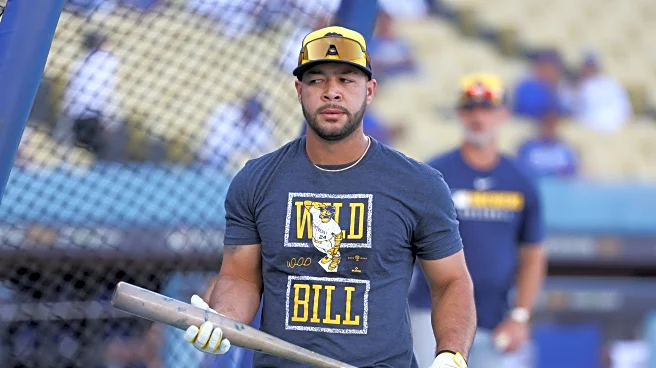
The Milwaukee Brewers have reportedly signed their No. 4-ranked prospect, Cooper Pratt, to an eight-year contract worth slightly more than $50 million. This move follows a similar strategy employed by the Brewers when they signed Jackson Chourio to an eight-year,
$82 million contract before his MLB debut. Pratt, a 21-year-old shortstop, has not played above Class AA until this year and is currently the starting shortstop for the Triple-A Nashville Sounds. The contract includes two option years, each worth approximately $15 million, potentially extending the deal to ten years. Despite Pratt's limited experience in Triple-A, the Brewers are betting on his potential, particularly his defensive skills, which have already earned him a minor league Gold Glove award.
Why It's Important?
This contract extension reflects the Brewers' strategy of securing young talent with team-friendly deals, a necessity for small-market teams that cannot compete financially with larger franchises. By locking in Pratt at an average annual value of less than $7 million, the Brewers aim to capitalize on his potential development into a major league player. This approach has proven successful with Jackson Chourio, who has become a rising star in MLB. If Pratt develops as expected, the Brewers could benefit from significant cost savings compared to acquiring similar talent through free agency, where one Win Above Replacement (WAR) is valued at $8-10 million.
What's Next?
The Brewers will likely continue to monitor Pratt's development in Triple-A, focusing on his offensive performance, which has shown signs of improvement. While Pratt's glove is considered major league-ready, his batting remains a work in progress. The Brewers may delay his MLB debut until they are confident in his overall readiness. Additionally, the team will continue to evaluate their current shortstop, Joey Ortiz, as they plan for future roster configurations. The success of this contract could influence the Brewers' approach to other prospects, reinforcing their strategy of early, long-term investments in young talent.