


What's Happening?
ION Minerals, a Houston-based company, has announced a significant expansion of its lithium resource portfolio across the United States and Canada. The company has strategically increased its acreage through acquisitions, leasing, and geological evaluations,
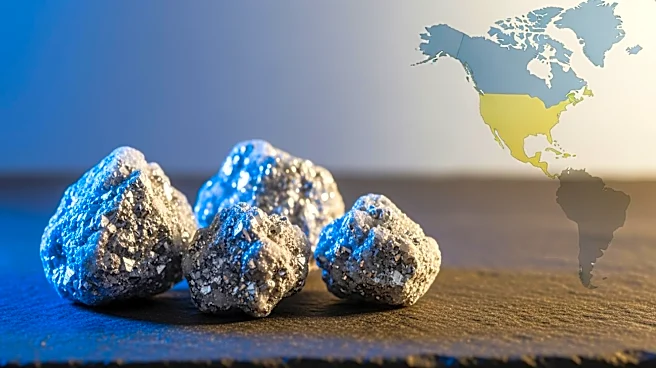
now controlling over 280,000 mineral acres across three project areas. This expansion positions ION as a leading developer of lithium resources crucial for the North American battery supply chain. In East Texas, ION controls nearly 50,000 mineral acres in the Smackover Formation, a region rich in lithium brine. The Texas Panhandle region adds another 65,000 mineral acres, with an estimated 2.4 million tonnes of lithium carbonate equivalent (LCE) in place. Additionally, ION has acquired over 165,000 mineral acres in Southeast Saskatchewan, targeting the Duperow Formation, with an estimated 2.5 million tonnes of LCE potential. Drilling and testing in Saskatchewan are scheduled to begin in Summer 2026.
Why It's Important?
The expansion of ION Minerals' lithium holdings is significant for the North American battery supply chain, which is crucial for the growing electric vehicle market and other electronic devices. By increasing its resource base, ION is poised to become a key player in the lithium market, potentially reducing North America's reliance on foreign lithium sources. This move aligns with broader industry trends towards securing domestic supply chains for critical minerals. The strategic locations of ION's holdings, particularly in the Smackover Formation and the Texas Panhandle, offer substantial commercial development potential, which could lead to increased economic activity and job creation in these regions. Furthermore, the expansion supports the transition to renewable energy by ensuring a steady supply of lithium for battery production.
What's Next?
ION Minerals plans to begin drilling and testing in the newly acquired Saskatchewan acreage in Summer 2026. This development will likely attract attention from investors and industry stakeholders interested in the lithium market. As the company progresses with its projects, it may face regulatory and environmental challenges, particularly concerning the sustainable extraction of lithium. The success of these projects could influence other companies to explore similar opportunities in North America's lithium-rich regions. Additionally, the expansion may prompt discussions on policies to support domestic mineral production and reduce dependency on international sources.