









What's Happening?
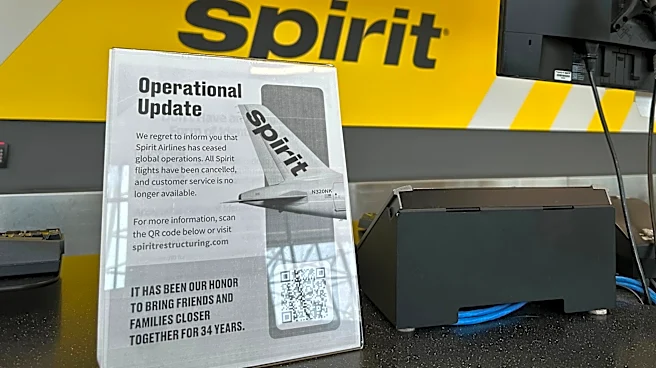
Spirit Airlines, a major player in the ultra-low-cost carrier market in the United States, has ceased all operations as of May 2, 2026. This decision follows financial difficulties and two bankruptcy filings in recent years. The shutdown has left thousands
of passengers stranded and employees uncertain about their future. In response, U.S. Transportation Secretary Sean Duffy announced a comprehensive industry-wide 'Rescue Package' to mitigate the impact on travelers. This plan involves collaboration with nine major U.S. airlines to offer capped ticket prices, discounted 'rescue fares,' and expanded route capacity to accommodate displaced Spirit passengers. The final flight of Spirit Airlines, known for its 'Yellow Bird' branding, marked the end of an era for the airline, which had been struggling due to rising oil prices and failed bailout negotiations.
Why It's Important?
The cessation of Spirit Airlines operations marks a significant shift in the U.S. aviation industry, particularly affecting the low-cost travel segment. The immediate response by the Department of Transportation and major airlines aims to prevent a travel crisis by ensuring passengers are not subjected to exorbitant last-minute fares. This situation highlights the vulnerability of low-cost carriers to economic fluctuations and the importance of strategic industry support during financial downturns. The shutdown also raises concerns about potential increases in domestic airfares, as Spirit's aggressive pricing strategies had previously kept competitors' prices in check. The broader implications for the workforce are also significant, with thousands of employees facing job uncertainty.
What's Next?
In the wake of Spirit Airlines' shutdown, the focus will be on the implementation of the 'Rescue Package' to ensure smooth rebooking processes for affected passengers. Airlines involved in the plan will need to manage increased demand on overlapping routes and maintain capped fares to prevent price gouging. Additionally, the aviation industry will likely see further consolidation as competitors like Frontier Airlines expand their market share. For Spirit's former employees, efforts are underway to facilitate their transition to new roles within the industry, with some airlines offering fast-track hiring processes. The long-term impact on the low-cost carrier market and potential regulatory responses will be closely monitored.
Beyond the Headlines
The collapse of Spirit Airlines underscores the challenges faced by ultra-low-cost carriers in maintaining profitability amidst volatile economic conditions. The airline's business model, which relied heavily on ancillary fees, was particularly vulnerable to fluctuations in fuel prices and economic downturns. The situation also highlights the regulatory landscape's role in shaping industry dynamics, as past decisions, such as blocking mergers, have long-term consequences. The response to Spirit's shutdown may set a precedent for how the government and industry handle future airline collapses, emphasizing the need for robust contingency plans to protect consumers and employees.