


What's Happening?
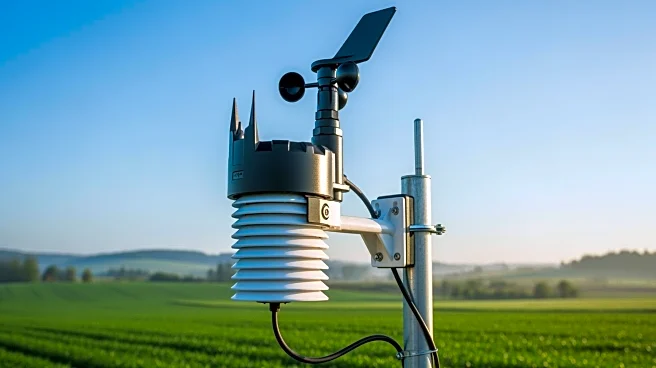
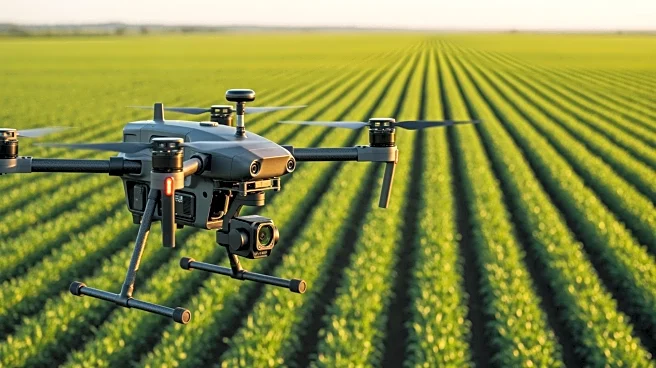
The agricultural sector in the United States is undergoing a transformation with the adoption of high-tech farming solutions. As traditional farming practices evolve, there is a notable shift towards integrating advanced technologies to enhance efficiency and productivity. A government report highlights that while the number of farms is decreasing, those that remain are becoming increasingly 'tech dense.' A 2024 survey by McKinsey found that 57% of North American farmers plan to experiment with new yield-increasing technologies within the next two years. Farmers like Jake Leguee in Saskatchewan are using precision spraying technology to reduce pesticide use, while Norah Lake of Sweetland Farms in Vermont employs data-driven apps to manage crop
yields. These technologies not only improve efficiency but also optimize resource use, offering significant returns on investment.
Why It's Important?
The integration of high-tech solutions in agriculture is crucial for several reasons. Firstly, it addresses the challenge of maintaining a stable food supply by reducing crop failures through technology. This can lead to increased food availability and potentially lower prices for consumers, as noted by Heather Darby, an agronomist at the University of Vermont. Additionally, the adoption of technology in farming supports sustainable practices, which are essential for the long-term viability of agriculture. As the industry becomes more reliant on technology, it also encourages farmers to view their operations through a business lens, fostering profitability and improving the quality of life for farming families. The generational divide in adopting these technologies highlights the need for modernization to ensure the future success of family-run farms.
What's Next?
As high-tech farming continues to gain traction, the agricultural sector is likely to see further advancements in technology adoption. Companies like Syngenta and startups like NoMaze are developing software that provides actionable insights and simulations to help farmers make informed decisions. These tools can alert farmers to potential issues such as pest outbreaks, enabling timely interventions. The ongoing shift towards technology-driven agriculture will require farmers to adapt and embrace new methods, potentially leading to a more resilient and efficient agricultural industry. The focus will be on balancing technological innovation with traditional farming practices to ensure sustainable growth.
Beyond the Headlines
The move towards high-tech farming also raises important ethical and cultural considerations. As technology becomes more embedded in agriculture, there is a risk of widening the gap between large-scale operations and smaller, family-run farms that may struggle to afford these innovations. This could lead to increased consolidation in the industry, with larger farms benefiting more from technological advancements. Additionally, the reliance on technology may impact the cultural heritage of farming, as traditional methods are replaced by modern practices. It is essential to address these challenges to ensure that the benefits of high-tech farming are accessible to all farmers, regardless of size or resources.