



What's Happening?
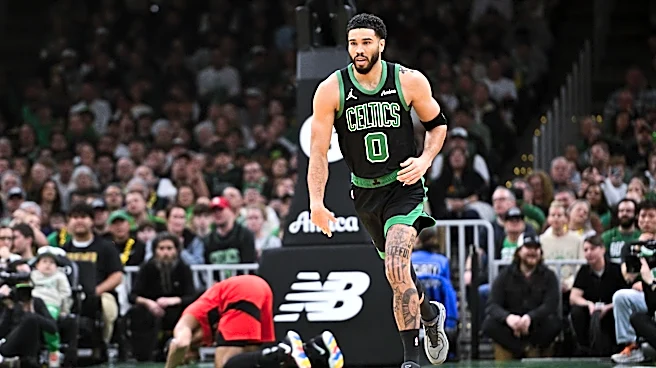
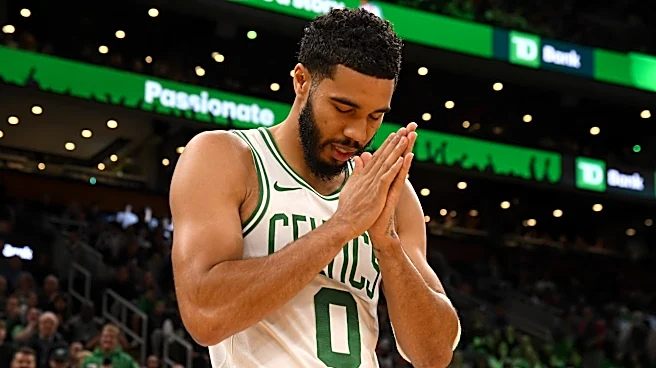
Boston Celtics forward Jayson Tatum has turned his Achilles tendon injury rehab into a learning opportunity, spending significant time with the team's coaching staff. During his recovery, Tatum observed the game from the coaches' perspective, gaining
insights into strategic elements on both ends of the floor. This experience has influenced his play since returning, particularly in rebounding, where he has achieved career-high numbers. Tatum's time on the bench has also fostered a sense of gratitude for the chance to compete for a championship, a sentiment he expressed in a recent interview with NBC Sports Boston.
Why It's Important?
Tatum's approach to his injury rehab highlights the importance of adaptability and learning in professional sports. By leveraging his downtime to gain strategic insights, Tatum has enhanced his performance, contributing to the Celtics' competitive edge. His focus on rebounding and strategic play could significantly impact the team's success in the playoffs. Additionally, Tatum's gratitude for the opportunity to compete underscores the unpredictable nature of sports careers, reminding athletes and fans alike of the value of resilience and seizing opportunities.
What's Next?
As Tatum continues to integrate his newfound strategic insights into his gameplay, the Celtics may benefit from improved team dynamics and performance. His focus on rebounding and strategic play could be pivotal in upcoming playoff matches. The team's coaching staff might also consider incorporating Tatum's observations into broader team strategies, potentially enhancing their competitive edge. Fans and analysts will be watching closely to see how these developments influence the Celtics' playoff journey.
Beyond the Headlines
Tatum's experience during his injury rehab raises broader questions about the role of athlete education and strategic learning in sports. It suggests that time spent off the court can be as valuable as time spent playing, offering athletes a chance to develop a deeper understanding of the game. This approach could inspire other players to use injury periods for personal and professional growth, potentially leading to a shift in how athletes approach recovery and career development.