



What's Happening?
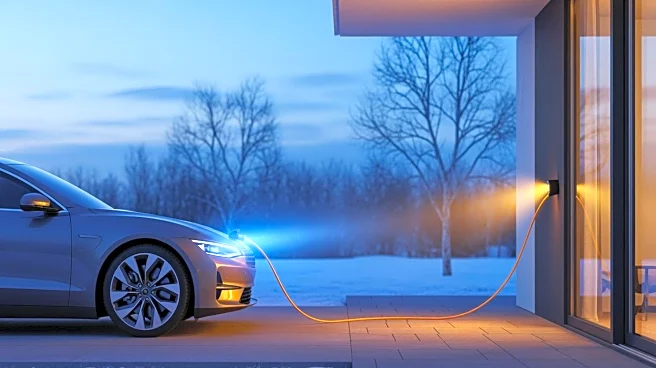
As severe winter weather strains the U.S. power grid, electric vehicles (EVs) are emerging as valuable emergency power sources. In West Monroe, Louisiana, Keith McGrew used his Ford F-150 Lightning to power his home during a blackout, highlighting the potential of EVs as backup power solutions. The ability of EVs to provide bidirectional charging, or vehicle-to-home (V2H) capabilities, is becoming increasingly popular among consumers. Currently, about 14 of the 70 EV models available in the U.S. offer this feature, and the number is expected to grow. Automakers like General Motors, Hyundai, and Tesla are incorporating V2H capabilities into their new models, making EVs a practical option for emergency preparedness.
Why It's Important?
The use of EVs as emergency
power sources underscores their versatility and potential to enhance energy resilience. As extreme weather events become more frequent, the ability to use EVs as backup power can provide significant peace of mind to homeowners. This development also highlights the growing importance of integrating renewable energy solutions into everyday life. The trend could drive increased adoption of EVs, as consumers recognize their dual functionality as both transportation and power sources. Additionally, the shift towards bidirectional charging could influence energy policies and grid management strategies, as utilities explore ways to leverage EVs to stabilize the power grid.
What's Next?
The expansion of V2H capabilities in EVs is likely to continue, with more automakers incorporating this feature into their models. As the technology becomes more widespread, it could lead to new business opportunities and partnerships between automakers, utilities, and technology providers. Policymakers may also consider incentives to encourage the adoption of EVs with bidirectional charging, as part of broader efforts to enhance energy resilience and reduce reliance on fossil fuels. The success of EVs as emergency power sources could also spur innovation in related technologies, such as home energy management systems and renewable energy integration.