





What's Happening?
The Bureau of Labor Statistics reported that the U.S. Consumer Price Index (CPI) for April 2026 rose to 3.8% year-over-year, marking the highest inflation rate since May 2023. This increase was driven by a 17.9% annual rise in energy prices. In response,
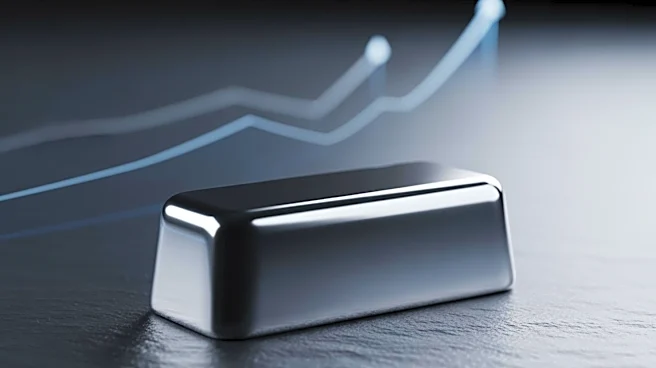
the Federal Reserve has maintained the federal funds rate at 3.50%-3.75%, with no further rate cuts expected for 2026. This decision has put pressure on silver prices, which fell from $86.73/oz to $74.96/oz over six trading sessions. The Silver Institute projects a continued supply deficit, with a shortfall of 67 million ounces expected in 2026. Despite the monetary pressures, physical investment demand for silver is projected to rise by 20% to 227 million ounces, driven by resumed imports in India and increased demand from sectors like AI and semiconductor manufacturing.
Why It's Important?
The elevated inflation and Fed's interest rate decisions have significant implications for the silver market and broader economic conditions. The lack of rate cuts limits monetary policy flexibility, affecting investment strategies and economic growth. For the silver market, the persistent supply deficit, now totaling 762 million ounces over six years, highlights ongoing physical constraints despite monetary pressures. This situation affects producers, developers, and investors differently, with those operating at lower costs maintaining profitability. The shift in industrial demand from solar to high-silver-intensity applications like AI and semiconductors indicates changing market dynamics. The Fed's decisions and inflation trends will continue to influence silver's role as a hedge against economic uncertainty.
What's Next?
The upcoming Federal Open Market Committee meeting on June 16-17, 2026, will be crucial in shaping future market expectations. The meeting will include an updated dot plot, which could signal potential rate cuts in September 2026, potentially increasing investor demand for silver. Meanwhile, producers and developers will continue to navigate the current price environment, with some projects potentially benefiting from higher silver prices. The ongoing supply deficit and industrial demand shifts will remain key factors in the silver market's trajectory.
Beyond the Headlines
The silver market's dynamics reflect broader economic and industrial trends, including the impact of monetary policy on commodity prices and the evolving demand landscape. The persistent supply deficit underscores the challenges in balancing physical supply with growing industrial and investment demand. Additionally, the shift from solar to other high-silver-intensity applications highlights the adaptability of industrial sectors to changing economic conditions. These developments may influence long-term investment strategies and policy decisions related to resource management and economic stability.