
What's Happening?
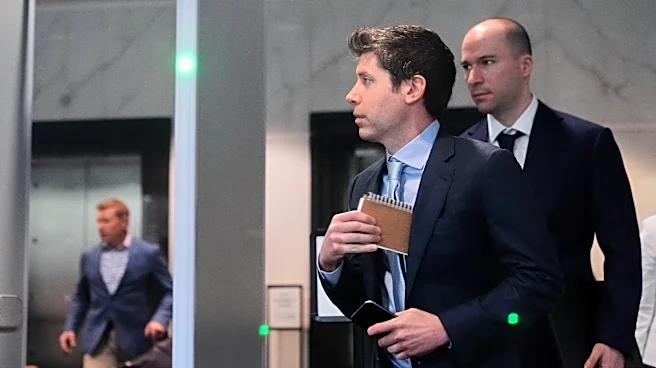
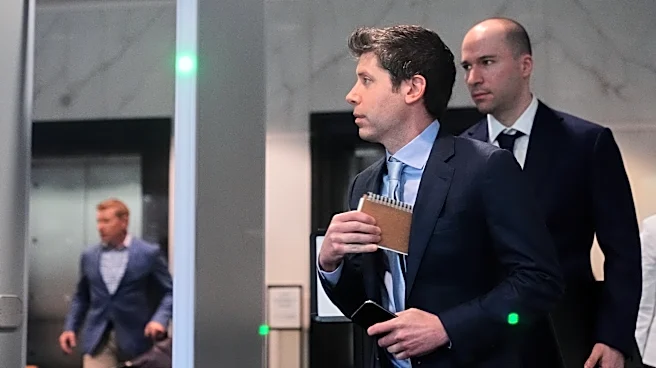
The legal proceedings between Elon Musk and OpenAI have reached a critical juncture as closing arguments were presented in a federal courtroom in Oakland, California. Musk's attorney, Steven Molo, delivered
a forceful closing statement, accusing OpenAI's CEO Sam Altman and President Greg Brockman of prioritizing commercial interests over the company's original mission to develop AI for public benefit. Musk, who previously served on OpenAI's board, is seeking $150 billion in damages and a court order to revert OpenAI's for-profit status. OpenAI's lawyer, Sarah Eddy, countered these claims, arguing that Musk's allegations were unsupported by evidence and that no commitments were made to him regarding a charitable trust. The trial has been marked by personal attacks and social media exchanges, with Musk referring to Altman as 'Scam Altman' and receiving a rebuke from the presiding judge.
Why It's Important?
This trial is significant as it highlights the tensions between commercial interests and ethical considerations in the rapidly evolving field of artificial intelligence. The outcome could set a precedent for how tech companies balance profit motives with their stated missions of public benefit. A ruling in favor of Musk could impact OpenAI's operational structure and influence other tech firms' governance models. The case also underscores the challenges of maintaining trust and transparency in partnerships, especially in high-stakes industries like AI. The trial has drawn attention from major tech players, including Microsoft, which has been implicated in Musk's allegations of aiding OpenAI's shift towards profit-driven goals.
What's Next?
The jury is expected to begin deliberations soon, with their verdict serving as an advisory opinion to the judge. The decision could have far-reaching implications for OpenAI and its stakeholders, potentially affecting its business model and strategic direction. Depending on the outcome, there may be further legal challenges or appeals. The tech industry will be closely watching the verdict, as it may influence future collaborations and investments in AI development. Additionally, the trial's conclusion could prompt discussions on the ethical responsibilities of tech companies and the role of philanthropy in innovation.