





What's Happening?
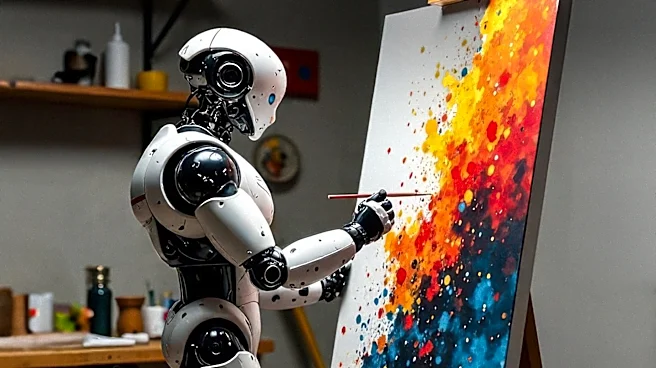
A recent survey conducted by researchers at Carnegie Mellon University reveals that 99% of professional visual artists express a strong dislike for generative AI technology. The survey highlights concerns about AI's impact on artists' careers, with many
reporting diminished income, job security, and career growth. Artists in fields such as commercial art, graphic design, and concept art are particularly affected, as AI-generated images often replace their work. The study also notes the psychological toll on artists, who feel demoralized and pressured to prove their work is not AI-generated. This sentiment is echoed in an ongoing survey by Brian Merchant, which documents artists' experiences with AI's impact on their livelihoods.
Why It's Important?
The findings underscore the significant challenges AI poses to the creative industry, particularly for visual artists. As AI technology becomes more prevalent, it threatens to devalue traditional artistic skills and reduce employment opportunities in the arts. This shift could lead to a broader cultural impact, as the role of human creativity in art is questioned. The survey also highlights the need for protective measures and policies to support artists and ensure fair compensation in an AI-driven market. The growing discontent among artists may fuel resistance against AI's encroachment into creative fields, prompting discussions on ethical AI use and intellectual property rights.
Beyond the Headlines
The survey raises ethical questions about the use of AI in art and the potential loss of human touch in creative processes. It also highlights the need for transparency in AI-generated content and the importance of preserving artistic integrity. As artists grapple with these challenges, there is a call for innovative solutions, such as tools that protect against unauthorized AI use. The situation also reflects broader societal concerns about technology's impact on employment and the future of work, emphasizing the need for adaptive strategies in education and workforce development.