






What's Happening?
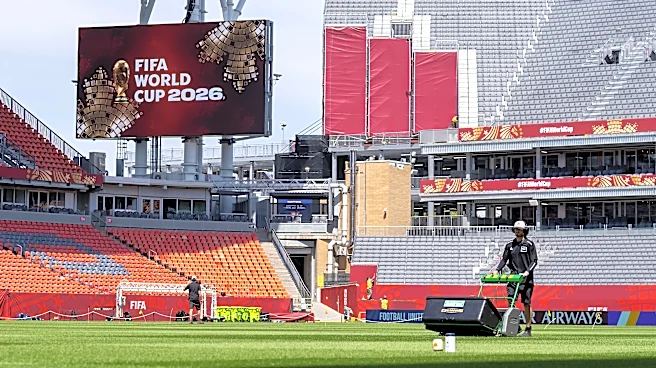
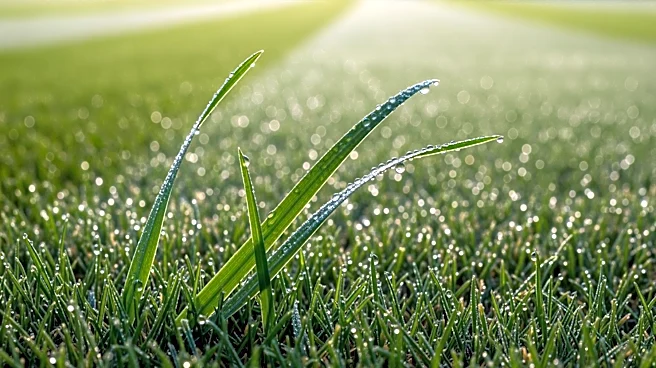
Turfgrass scientist John Trey Rogers has dedicated six years to preparing the grass for the World Cup pitches across 16 venues in North America. Rogers, a professor at Michigan State University, has collaborated with experts to determine the best grass species
for each stadium, considering factors like climate and stadium architecture. The challenge is heightened by the presence of domed stadiums, which limit sunlight exposure. To address this, Rogers and his team have developed a strategy using artificial grow lights and irrigation systems to maintain the grass. The World Cup, starting June 11, will feature 48 teams playing 104 matches, with the grass quality being crucial for player performance and safety.
Why It's Important?
The quality of the grass pitches is critical for the World Cup as it affects the gameplay, player safety, and overall tournament success. Natural turf is preferred by FIFA for its control and comfort, which are essential for high-stakes matches. The preparation of these pitches involves significant logistical and scientific efforts, reflecting the importance of infrastructure in global sporting events. The successful implementation of these grass systems could set a precedent for future tournaments, influencing how stadiums are prepared for international competitions. This project also highlights the intersection of sports and science, showcasing the role of research in enhancing athletic performance.
What's Next?
As the World Cup progresses, the performance of the grass pitches will be closely monitored. Rogers and his team aim to avoid past criticisms of pitch quality seen in other tournaments. The success of this endeavor could lead to further innovations in turf management for sports events. Stakeholders, including FIFA and stadium operators, will likely evaluate the outcomes to inform future decisions on stadium preparations. The use of artificial grow lights and other technologies may become more widespread if proven effective, potentially influencing stadium designs and maintenance practices globally.
Beyond the Headlines
This project underscores the broader implications of integrating scientific research into sports infrastructure. The collaboration between universities and industry experts exemplifies how academic research can address practical challenges in sports. Additionally, the focus on natural turf aligns with environmental considerations, as it offers a more sustainable option compared to artificial surfaces. The project also highlights the cultural significance of soccer in the U.S., where stadiums are traditionally designed for other sports, necessitating adaptations for international events like the World Cup.