






What's Happening?
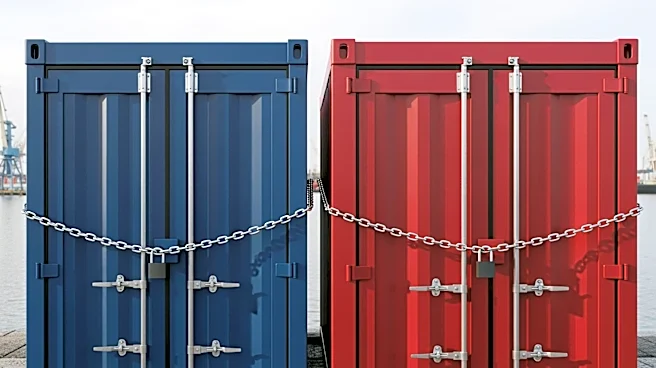
A recent report by Infios reveals that businesses are adapting their shipping routes and sourcing strategies in response to increasing tariff pressures. The report, titled 'The Rise of the Tariff-Optimized Supply Chain: Inside the New Rules of Global
Trade,' analyzed over one million U.S. customs entries. It found that companies initially made short-term adjustments, such as altering shipping routes and experimenting with different transportation methods. These changes have now evolved into more permanent strategies within their supply chain operations. Ed Auriemma, CEO of Infios, emphasized that companies that quickly recognize and adapt to these shifts are better positioned to maintain uninterrupted operations.
Why It's Important?
The findings of the Infios report underscore a significant shift in global trade patterns, driven by the need to mitigate the impact of tariffs. This adaptation is crucial for businesses aiming to maintain competitiveness and operational efficiency in a volatile trade environment. The ability to swiftly adjust supply chain strategies can provide a competitive edge, ensuring that companies can continue to deliver products without disruption. This shift also highlights the broader economic implications, as changes in trade routes and sourcing can affect logistics, transportation industries, and potentially lead to shifts in employment within these sectors.
What's Next?
As businesses continue to adapt to tariff pressures, further changes in global trade patterns are anticipated. Companies may increasingly invest in technology and analytics to better predict and respond to trade disruptions. Additionally, there may be a push for policy changes or trade agreements that could alleviate some of the pressures caused by tariffs. Stakeholders, including logistics providers and policymakers, will likely monitor these developments closely to support businesses in navigating the evolving trade landscape.