



What's Happening?
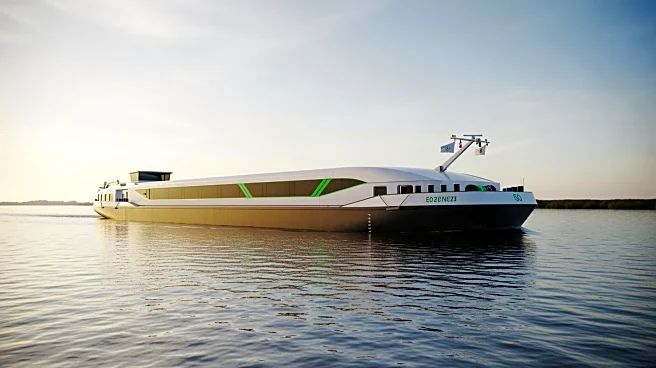
CMA CGM is set to introduce an electric inland barge service on the Fos-Lyon corridor in France, aiming to transport nearly 12,000 TEUs annually. This initiative is part of a broader strategy to provide a reliable, competitive, and environmentally friendly logistics solution between the Port of Marseille-Fos, Lyon, and the Rhône Valley. The project seeks to promote a modal shift from road to waterway transport, thereby reducing congestion on the A7 motorway. By 2030, CMA CGM plans to double its multimodal volumes in Lyon, increasing inland waterway transport to 100,000 TEUs per year and rail transport to 60,000 TEUs per year. The barge, measuring 185 meters and with a capacity of 156 TEU, is scheduled for delivery in 2028. CMA CGM is collaborating
with operator Combronde for the service's operation and commercial deployment, and with Compagnie Nationale du Rhône on technical studies for charging stations in Lyon and Arles.
Why It's Important?
The launch of this electric barge service represents a significant step towards sustainable logistics, aligning with global efforts to reduce carbon emissions in the transportation sector. By shifting freight from road to waterway, CMA CGM aims to alleviate road congestion and lower environmental impact, which is crucial as industries face increasing pressure to adopt greener practices. This initiative could set a precedent for other logistics companies to follow, potentially transforming the landscape of freight transport in Europe and beyond. The investment in infrastructure and technology not only supports environmental goals but also enhances the efficiency and reliability of supply chains, benefiting businesses and consumers alike.
What's Next?
CMA CGM's project is expected to progress with the construction of the barge and the development of necessary infrastructure, such as charging stations. The company will continue to work with regional partners to ensure the successful implementation of the service. As the project advances, stakeholders, including local governments and environmental groups, may closely monitor its impact on regional traffic and emissions. The success of this initiative could influence future policy decisions regarding transportation and environmental regulations, potentially encouraging further investments in sustainable logistics solutions.