

What's Happening?
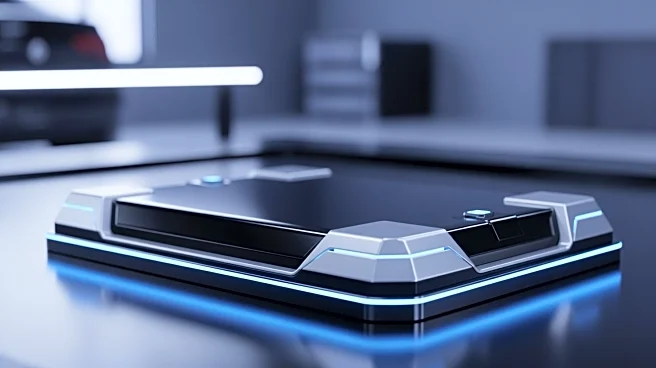
Karma Automotive, in partnership with Massachusetts-based Factorial Energy, is advancing the development of solid-state batteries for electric vehicles (EVs) in the United States. The collaboration focuses on integrating Factorial's FEST quasi-solid-state battery technology into Karma's upcoming 2027 Karma Kaveya supercar. This vehicle is expected to deliver over 1,000 horsepower and achieve a 0-60 mph time in under three seconds. Solid-state batteries are considered a significant advancement in EV technology due to their higher energy density, improved safety, faster charging capabilities, and reduced weight compared to traditional lithium-ion batteries. Factorial's technology is compatible with existing lithium-ion manufacturing equipment,
which could facilitate quicker adoption without the need for new production facilities. The partnership aims to validate the technology through real-world testing, marking a step towards broader implementation in the automotive industry.
Why It's Important?
The collaboration between Karma Automotive and Factorial Energy represents a pivotal moment in the EV industry, as it moves from theoretical promise to practical application. Solid-state batteries offer numerous advantages over conventional lithium-ion batteries, including enhanced safety and efficiency, which could revolutionize EV performance and consumer acceptance. This development is particularly significant for the U.S. automotive sector, as it positions American companies at the forefront of cutting-edge battery technology. The successful integration of solid-state batteries could lead to increased competitiveness in the global EV market, potentially influencing industry standards and consumer expectations. Additionally, the ability to use existing manufacturing infrastructure for these batteries could accelerate their adoption, reducing costs and time to market.
What's Next?
While the partnership marks a significant step forward, the widespread adoption of solid-state batteries in mass-market vehicles is not imminent. Analysts predict that these batteries will initially be used in high-end applications, with broader adoption expected towards the end of the decade. For Karma Automotive, the successful deployment of a solid-state battery in the Kaveya supercar could establish a new benchmark for performance and innovation in American EVs. As the technology proves itself in real-world conditions, other automakers may follow suit, leading to increased investment and development in solid-state battery technology. The industry will be closely watching the outcomes of this collaboration to gauge the feasibility and scalability of solid-state batteries in future EV models.