



What's Happening?
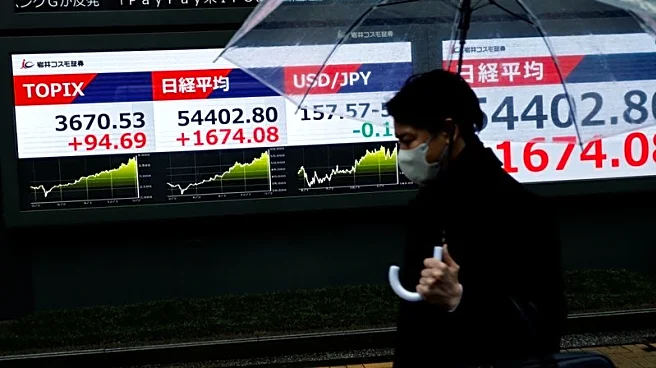
Global government bond prices are experiencing their most significant monthly decline in years due to the ongoing conflict in the Middle East, which has heightened concerns about inflation and economic growth. The two-year U.S. Treasury yield, which inversely
correlates with bond prices, is set for a monthly rise of approximately 50 basis points, marking its largest increase since October 2024. This trend is mirrored in Europe, where bond yields have also surged, with the European Central Bank and Bank of England expected to implement rate hikes. The conflict has led to a dramatic increase in oil prices, which remain above $100 per barrel, further exacerbating inflation fears.
Why It's Important?
The decline in bond prices and the corresponding rise in yields reflect market concerns about stagflation—a combination of stagnant economic growth and high inflation. This situation poses a challenge for central banks, which must balance the need to control inflation without stifling economic growth. The ongoing conflict in the Middle East, particularly its impact on oil prices, is a significant factor driving these economic concerns. The situation underscores the interconnectedness of global markets and the potential for geopolitical events to influence economic conditions worldwide.
What's Next?
As the conflict continues, markets will likely remain volatile, with investors closely monitoring developments in the Middle East and their impact on global economic conditions. Central banks, particularly the Federal Reserve, will face pressure to adjust monetary policy in response to changing economic indicators. The potential for further rate hikes or cuts will depend on how the situation evolves and its impact on inflation and growth.