






What's Happening?
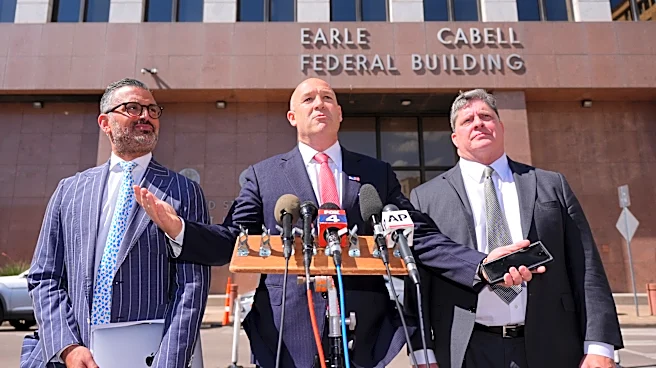
A Travis County judge has issued a temporary restraining order against the enforcement of new Texas state regulations that effectively banned the sale of smokable hemp products. These regulations, which took effect on March 31, altered the calculation
of THC levels, making it difficult for smokable hemp products like flower and concentrate to be sold legally. The Department of State Health Services (DSHS) also increased annual fees for hemp retailers and manufacturers significantly. A lawsuit filed by the Texas Hemp Business Council and other industry groups argues that the DSHS exceeded its authority, potentially forcing hundreds of businesses to close. The restraining order will remain in effect for two weeks, with a hearing scheduled for April 23 to determine if the rules should be suspended longer.
Why It's Important?
The temporary block on the smokable hemp ban is significant for the Texas hemp industry, which includes over 13,000 registered stores and nearly 800 licensed manufacturers. The new regulations threatened to disrupt the market by imposing prohibitive fees and altering THC calculations, which could have led to widespread business closures. The legal challenge highlights ongoing tensions between state regulatory bodies and the hemp industry, which is a growing sector in Texas. The outcome of this legal battle could set a precedent for how hemp products are regulated in the state, impacting economic stakeholders and potentially influencing similar regulations in other states.
What's Next?
The upcoming hearing on April 23 will be crucial in determining the future of the smokable hemp market in Texas. If the court decides to extend the suspension of the new rules, it could provide temporary relief to businesses while the legal case proceeds. However, if the rules are reinstated, many businesses may face closure due to the financial burden of increased fees and compliance costs. Stakeholders, including hemp retailers, manufacturers, and legal experts, will be closely monitoring the situation, as the decision could have broader implications for the regulation of hemp products nationwide.