






What's Happening?
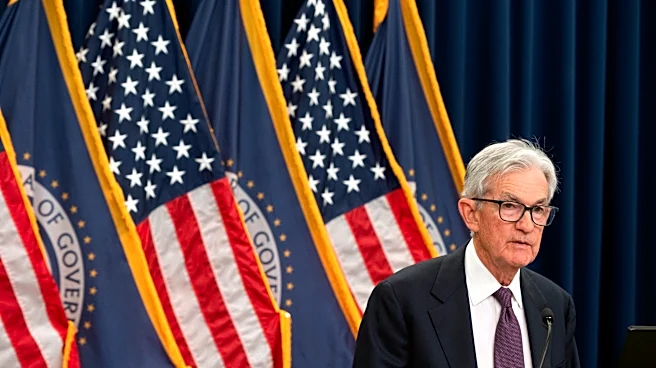
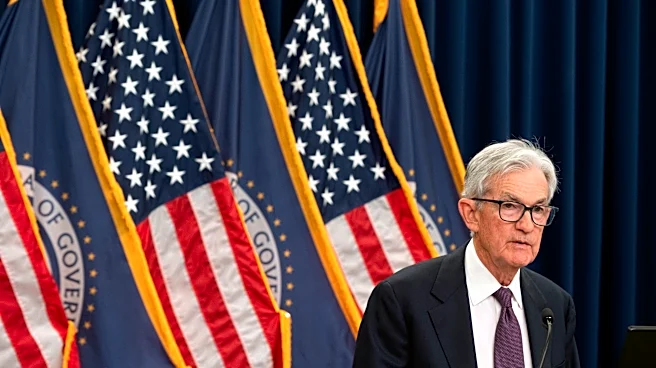
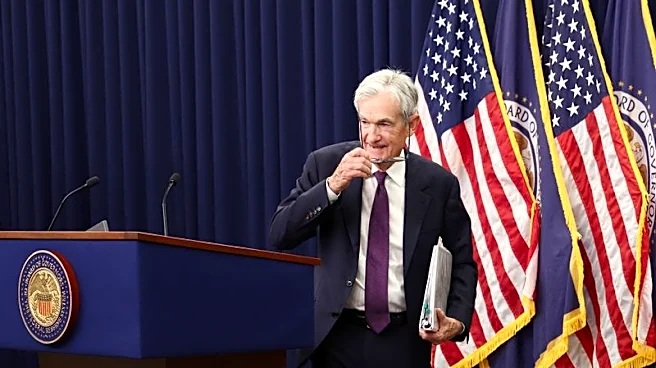
The Federal Reserve has decided to maintain the federal funds rate between 3.50% and 3.75% during what could be Jerome Powell's final meeting as chair. This decision comes amidst rising U.S. Treasury yields, with the 10-year note increasing by over 6
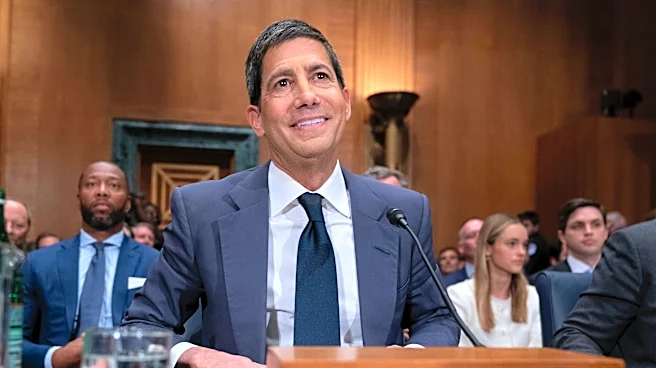
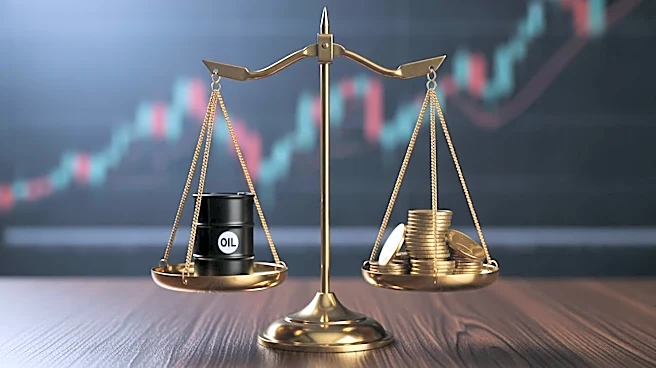
basis points to 4.416%. The meeting saw significant dissent, with three officials opposing the inclusion of an easing bias, indicating potential future rate cuts. Concerns over inflation and a strong labor market are influencing these decisions. Meanwhile, Kevin Warsh is poised to succeed Powell, with his confirmation likely following the Senate Banking Committee's vote. Rising oil prices, driven by Middle Eastern tensions, are also impacting the economic landscape, with West Texas Intermediate crude closing over 7% higher.
Why It's Important?
The Federal Reserve's decision to hold rates steady reflects ongoing concerns about inflation and economic growth. The dissent within the Fed highlights a divide over how to address these issues, with some officials wary of inflationary pressures. The potential confirmation of Kevin Warsh as the new Fed chair could signal a shift in monetary policy direction. Rising oil prices add another layer of complexity, potentially exacerbating inflation and influencing future Fed decisions. These developments are crucial for investors and policymakers as they navigate a volatile economic environment, with implications for borrowing costs, consumer spending, and overall economic stability.
What's Next?
The Senate is expected to confirm Kevin Warsh as the new Federal Reserve chair, which could lead to changes in monetary policy. Investors will be closely watching upcoming economic indicators, such as the personal consumption expenditures report, to gauge future inflation trends. The Fed's approach to balancing inflation risks with economic growth will be critical in the coming months. Additionally, geopolitical tensions and their impact on oil prices will remain a significant factor in economic forecasts. Stakeholders will need to adapt to these evolving conditions, with potential adjustments in investment strategies and policy responses.