
What's Happening?
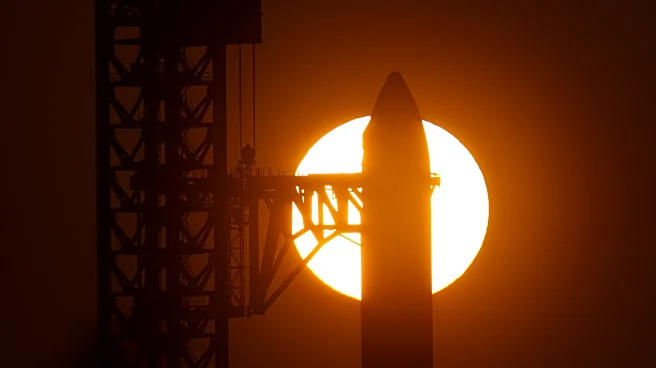
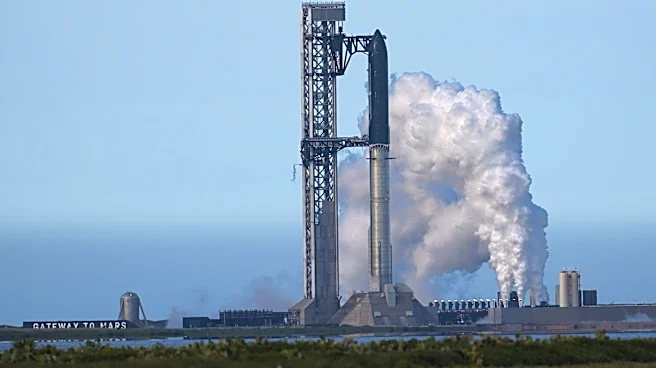
SpaceX successfully launched the latest version of its Starship vehicle, known as Starship V3, from its facility at Starbase, Texas. The launch, designated Flight 12, took place on May 22, 2026, after
a previous attempt was scrubbed due to a technical issue. The mission aimed to test significant upgrades made to both the Super Heavy booster and the Starship upper stage, which are intended to enhance performance and reliability for future orbital missions. During the flight, the Super Heavy booster fired its 33 Raptor 3 engines, although one engine shut down shortly after liftoff. The Starship upper stage then ignited its six engines and separated from the booster. Despite an engine shutdown in the upper stage, the vehicle continued its trajectory, deploying 20 Starlink mass simulators and two additional spacecraft. The mission concluded with a planned splashdown in the Indian Ocean, where the vehicle tipped over and exploded as expected.
Why It's Important?
The successful launch of Starship V3 marks a critical step forward for SpaceX as it continues to develop its next-generation spacecraft for a variety of missions, including satellite deployments and lunar landings. The upgrades tested in this flight are crucial for the vehicle's future role in NASA's Artemis program, where it is expected to serve as a lunar lander. The ability to deploy Starlink satellites and other payloads efficiently is also vital for SpaceX's commercial ambitions. The test results will inform further refinements to the Starship design, potentially accelerating the timeline for operational missions. This development is significant for the U.S. space industry, as it enhances the country's capabilities in space exploration and commercial satellite deployment.
What's Next?
SpaceX has not yet announced a timeline for the next Starship launch or the first orbital flight. However, the company has indicated plans to begin orbital payload delivery missions with Starship in the latter half of the year. The data collected from this test flight will be analyzed to address any issues and improve the vehicle's design. Stakeholders, including NASA and commercial partners, will be closely monitoring these developments as they have implications for future missions, such as the Artemis lunar landings and potential Mars exploration. The success of Starship V3 could also influence the competitive landscape of the space industry, as other companies strive to develop similar capabilities.