



What's Happening?
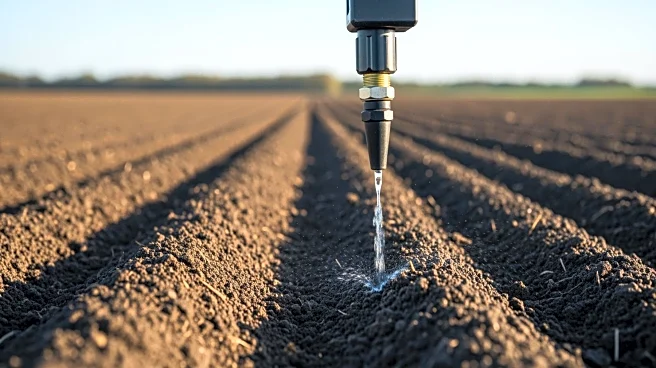
Kuhn has introduced the Liqui-Pro System at the National Farm Machinery Show in Louisville, Kentucky. This new system is designed to enhance liquid fertilizer application in strip-till farming. The Liqui-Pro System features a steerable, 1,600-gallon cart that is towed behind the Gladiator strip tillage system, allowing for precise seedbed placement and conditioning. According to Michael Berggren, product manager at Kuhn Krause, the system offers a turnkey solution for applying liquid fertilizer, with four different orifice sizes enabling application rates from 10 to 100 gallons per acre. The system includes an ISOBUS rate controller for ease of operation, allowing users to monitor each row and detect blockages using Tattler electronic row flow
sensing technology. Additionally, the system offers a 3-inch quick fill for fertilizer and a choice of pumps, with Pulse Width Modulation on the hydraulically-driven pump to vary application rates.
Why It's Important?
The introduction of the Liqui-Pro System represents a significant advancement in precision agriculture, particularly for farmers engaged in strip-till operations. By providing a more efficient and controlled method of applying liquid fertilizer, the system can potentially increase crop yields and reduce waste, leading to cost savings for farmers. The ability to monitor and adjust application rates in real-time enhances operational efficiency and ensures optimal nutrient delivery to crops. This innovation aligns with the broader trend towards precision farming, which aims to maximize productivity while minimizing environmental impact. As agriculture faces increasing pressure to produce more with fewer resources, technologies like the Liqui-Pro System are crucial in supporting sustainable farming practices.
What's Next?
Farmers interested in adopting the Liqui-Pro System can now check with dealers for pricing and availability. As the system becomes more widely used, it may prompt further innovations in precision agriculture technology. Stakeholders in the agricultural sector, including equipment manufacturers and agronomists, will likely monitor the system's performance and gather data on its impact on crop yields and resource efficiency. This could lead to further enhancements and adaptations of the technology to suit different farming conditions and crop types.