

What's Happening?
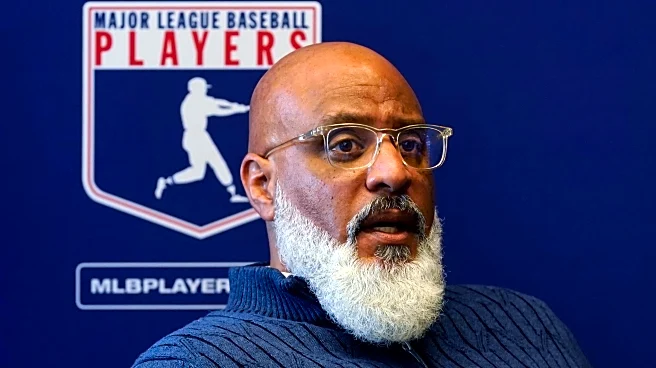
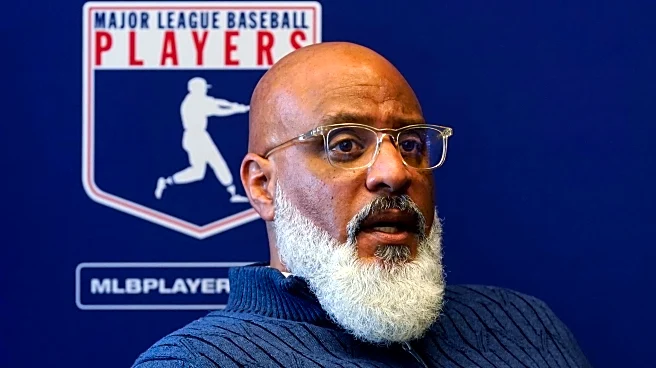
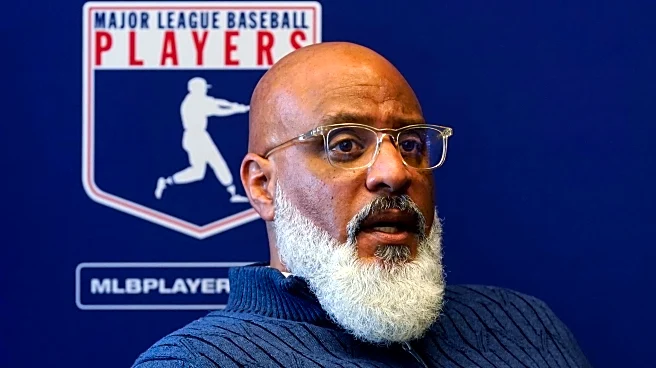
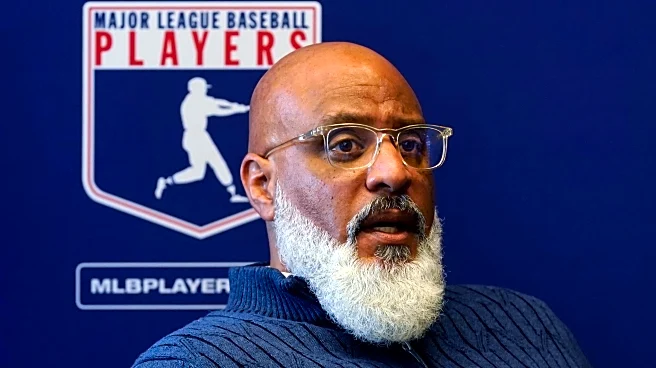
Bruce Meyer, the newly appointed head of the Major League Baseball Players Association (MLBPA), has firmly opposed the introduction of a salary cap, signaling potential labor tensions as the current labor contract nears expiration on December 1. Meyer, who succeeded Tony Clark following his resignation, emphasized the importance of maintaining the existing system of free agency and salary arbitration, which he argues rewards players based on performance. The MLBPA has historically resisted salary caps, a stance that led to a significant strike in 1994-95. Meyer, with a background in labor negotiations, has been a key figure in the MLBPA since 2018. His leadership comes at a critical time as MLB is expected to propose a salary cap, a move Meyer believes
would undermine player earnings and contract guarantees.
Why It's Important?
The stance taken by Bruce Meyer is crucial as it sets the stage for upcoming negotiations that could impact the financial structure of Major League Baseball. A salary cap could potentially limit player salaries and alter the dynamics of team payrolls, affecting both high-earning stars and middle-tier players. The MLBPA's resistance to such a cap underscores the union's commitment to preserving player rights and earnings potential. This development is significant for the broader sports industry, as it highlights ongoing tensions between labor and management over financial terms. The outcome of these negotiations could influence labor relations in other professional sports leagues, where salary caps are more common.
What's Next?
As the expiration of the current labor contract approaches, both the MLBPA and Major League Baseball will engage in negotiations to reach a new agreement. The potential for a labor dispute looms if the parties cannot reconcile their differences over the salary cap issue. The MLBPA, under Meyer's leadership, will likely continue to advocate for player-friendly terms, while MLB may push for cost-controlling measures. The outcome of these talks will be closely watched by players, team owners, and fans, as it could lead to significant changes in the league's financial landscape or even a work stoppage if an agreement is not reached.