







What's Happening?
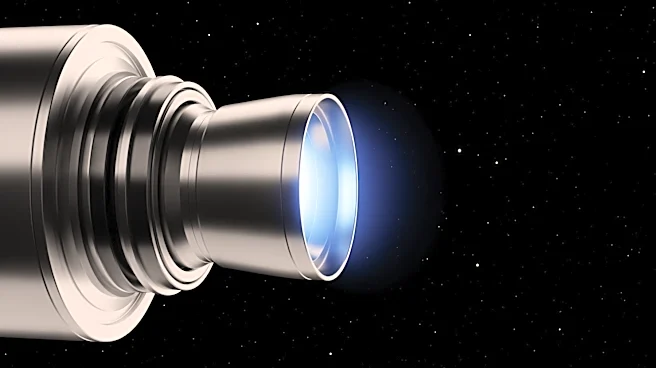
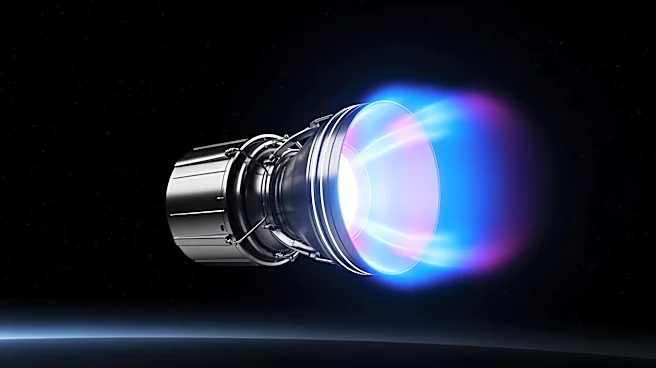
Rocket Lab has announced its entry into the spacecraft thruster market with the introduction of Gauss, an electric thruster designed to support both its own spacecraft programs and fill a gap in the industry. The demand for thrusters is increasing as more
commercial and government entities seek to deploy satellites with in-orbit maneuvering capabilities. Rocket Lab's acquisition of Mynaric, providing access to optical terminals, further strengthens its position in the market. The company aims to leverage its experience in building spacecraft components to overcome common industry challenges such as capacity limitations and scaling production.
Why It's Important?
Rocket Lab's expansion into the thruster market signifies a strategic diversification beyond its traditional launch services. This move could position the company as a key player in the broader space industry, offering comprehensive solutions that include both launch and in-orbit capabilities. The development of Gauss thrusters could enhance the operational flexibility and lifespan of satellites, benefiting a wide range of applications from communications to Earth observation. This diversification also reflects a broader industry trend where companies seek to integrate vertically to mitigate risks and ensure access to critical technologies.
What's Next?
Rocket Lab's focus will likely be on scaling the production of Gauss thrusters and integrating them into its existing spacecraft programs. The company may also explore partnerships with other space entities to expand its market reach. As the demand for satellite deployment and in-orbit services grows, Rocket Lab's comprehensive approach could attract new customers and drive further innovation in the space industry.