
What's Happening?
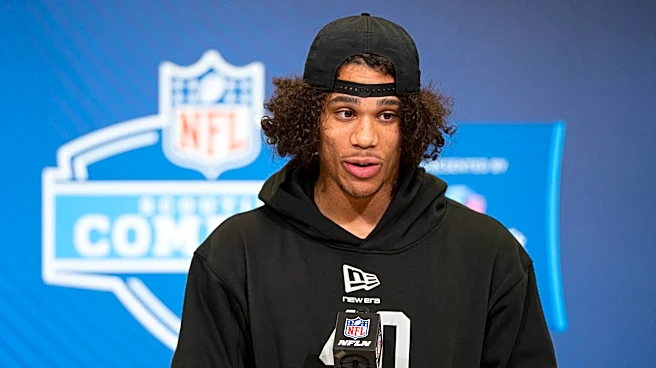
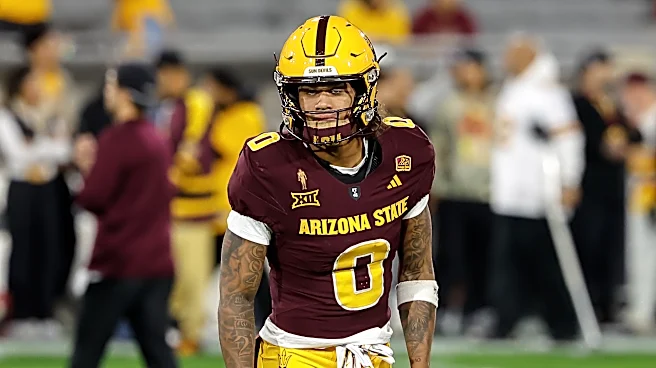
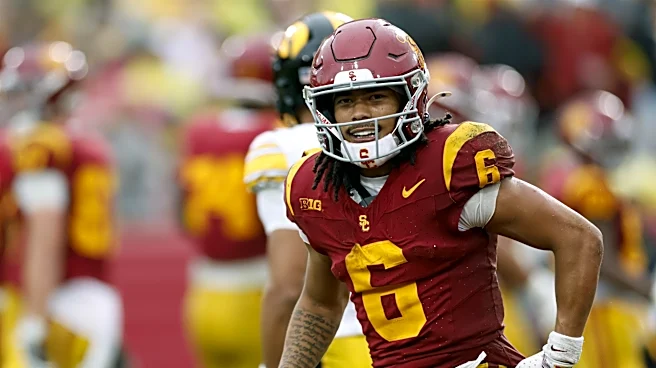
Jordyn Tyson, a wide receiver from Arizona State, is being spotlighted as a top prospect for the upcoming 2026 NFL Draft, scheduled to take place in Pittsburgh from April 23-25. Tyson, who stands 6-foot-2
and weighs 203 pounds, has shown significant potential despite a series of injuries that have interrupted his college career. Last season, he led the Big 12 in receptions before a hamstring injury cut his season short. In nine games, he recorded 61 catches for 711 yards and eight touchdowns. Tyson's previous seasons were also marred by injuries, including a broken collarbone and a major knee injury. Despite these setbacks, he is praised for his versatility and smooth route-running abilities. Draft analysts, including Lance Zierlein, have noted his improved size and route-running skills, although concerns about his speed and durability remain.
Why It's Important?
Tyson's potential entry into the NFL is significant for several reasons. His performance, when healthy, has been impressive, making him a valuable asset for any team looking to strengthen their receiving corps. His ability to align at multiple receiver spots adds to his versatility, a trait highly valued in the NFL. However, his injury history poses a risk, potentially affecting his draft position and future career. Teams will need to weigh his talent against the possibility of recurring injuries. The outcome of his draft could influence team strategies and player evaluations, particularly for those teams in need of a reliable wide receiver.
What's Next?
As the draft approaches, teams will continue to evaluate Tyson's health and performance potential. His ranking among draft analysts varies, with some placing him as high as the top wide receiver prospect, contingent on his health. Teams will likely conduct thorough medical evaluations to assess his readiness for the professional level. Tyson's performance in pre-draft workouts and interviews will also play a crucial role in determining his draft position. The decisions made by teams regarding Tyson could set a precedent for how injury-prone players are valued in future drafts.