

What's Happening?
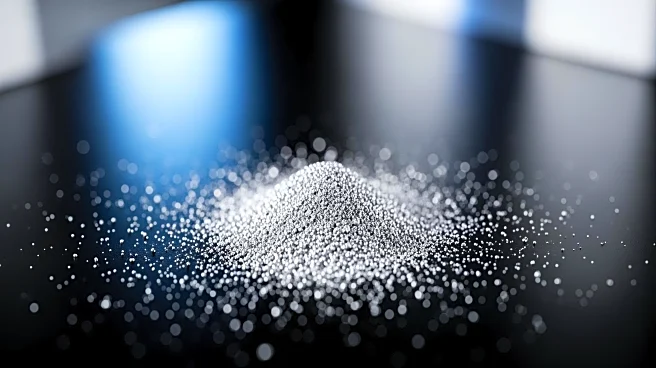
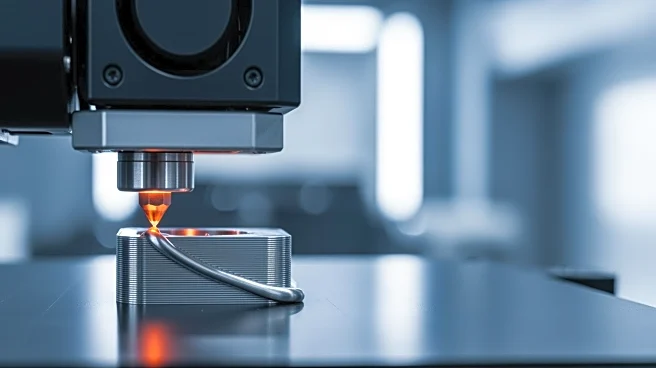
Researchers from several UK institutions, including University College London and Brunel University London, have developed a new aluminium alloy powder specifically for Directed Energy Deposition (DED) Additive Manufacturing. This development addresses
the limitations of conventional alloys in DED processes, which often suffer from defects that degrade mechanical performance. The new alloy, produced by Amazemet in Poland, features an ultra-fine microstructure and a uniform distribution of intermetallic phases, resulting in improved mechanical properties. Compared to the commonly used AlSi10Mg alloy, the new material shows a 70% increase in yield strength and a 50% increase in ultimate tensile strength. The study, published in the International Journal of Extreme Manufacturing, highlights the alloy's potential to reduce residual stress and susceptibility to cracking, making it a promising option for sectors like biomedical, energy, and transport.
Why It's Important?
The introduction of this new aluminium alloy powder could significantly impact industries reliant on DED Additive Manufacturing by enhancing the mechanical performance and reliability of fabricated components. This advancement may lead to broader adoption of DED technology in various sectors, as it addresses key challenges such as defect formation and mechanical degradation. The improved properties of the alloy could result in more durable and efficient components, potentially reducing costs and increasing the competitiveness of companies utilizing DED processes. Additionally, the research underscores the importance of material innovation in advancing manufacturing technologies and expanding their applications.