


What's Happening?
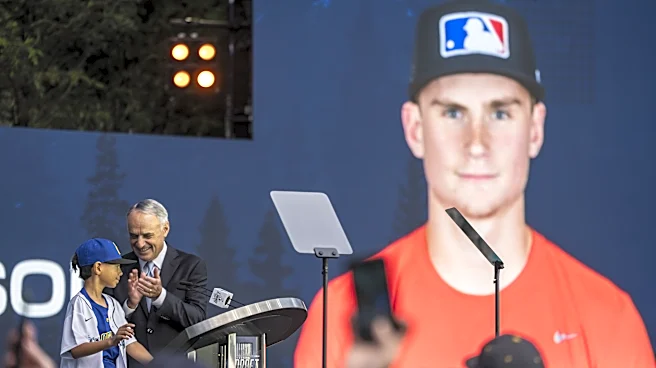
MLB Commissioner Rob Manfred is advocating for a regular schedule for the World Baseball Classic following its successful 2026 tournament. Historically, the event has been held irregularly due to labor negotiations and COVID-19 delays, with occurrences
in 2006, 2009, 2013, 2017, 2023, and 2026. Manfred emphasized the importance of establishing a consistent schedule to integrate the tournament into national broadcasting agreements, citing high fan engagement and record ratings during the 2026 event. The championship game saw Venezuela defeat the United States, marking a significant moment in the tournament's history. Manfred's comments on the Dan Patrick Show highlighted the need for regularity, driven by both fan interest and broadcast partner involvement.
Why It's Important?
The establishment of a regular schedule for the World Baseball Classic could significantly impact the sport's global reach and commercial viability. Regular scheduling would allow MLB to better integrate the tournament into its broadcasting deals, potentially increasing revenue and viewership. This move could also enhance the international profile of baseball, fostering greater global participation and fan engagement. For broadcasters, a predictable schedule offers more opportunities for advertising and sponsorship deals, benefiting the industry economically. Fans stand to gain from more frequent and predictable international competitions, enhancing their connection to the sport.
What's Next?
The next steps involve discussions on the frequency and timing of future tournaments, with considerations for a midseason event. Manfred has indicated that the decision will revolve around whether to hold the next tournament in 2029 or 2030, with feedback from fans urging a shorter interval. These discussions will likely involve negotiations with international baseball federations and broadcasters to finalize a schedule that maximizes exposure and profitability. Stakeholders, including teams and players, may also weigh in on the timing to ensure it aligns with the regular MLB season and minimizes disruptions.