



What's Happening?
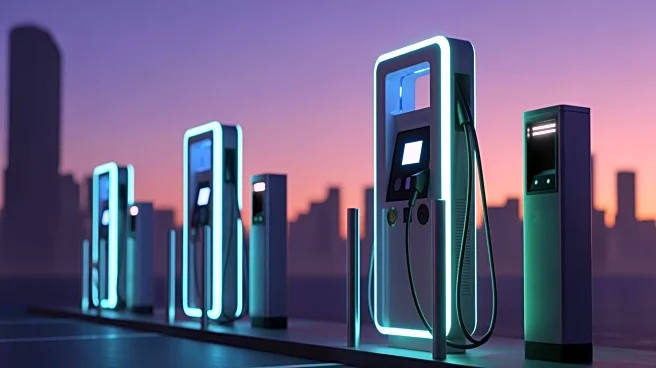
ComEd has granted a $500,000 rebate to bp pulse to support the development of a 40-port ultrafast electric vehicle (EV) charging hub near O'Hare Airport in Chicago. This hub, featuring a combination of 400kW and 150kW DC fast chargers, is one of the largest public charging sites in the region. It is part of a broader initiative by ComEd and bp pulse to establish six such projects across northern Illinois, with further locations anticipated by 2026. Since the inception of its EV rebate programs in February 2024, ComEd has distributed nearly $150 million across 356 northern Illinois zip codes, facilitating the installation of over 9,500 charging ports and more than 3,000 fleet EVs. Notably, 80% of these rebates have been allocated to low-income
customers or organizations serving low-income communities.
Why It's Important?
The rebate and subsequent development of the EV charging hub are significant steps towards enhancing the infrastructure necessary for the growing number of electric vehicles in Illinois. With over 160,000 EVs registered in the state, the demand for reliable and accessible charging options is increasing. This initiative supports state goals for a cleaner and more equitable future by expanding access to EV charging, particularly in underserved communities. The collaboration between ComEd and bp pulse exemplifies how utility companies and private enterprises can work together to accelerate the transition to sustainable transportation, potentially reducing carbon emissions and fostering economic growth in the green technology sector.
What's Next?
As the project progresses, additional funding from the Illinois EPA will support the expansion of the charging infrastructure. The continued partnership between ComEd and bp pulse is expected to lead to the development of more charging sites, further supporting the state's environmental goals. Stakeholders, including local governments and environmental groups, may monitor the project's impact on community access to EV charging and its contribution to reducing transportation-related emissions. The success of this initiative could serve as a model for similar projects nationwide, encouraging other states to invest in EV infrastructure.