






What's Happening?
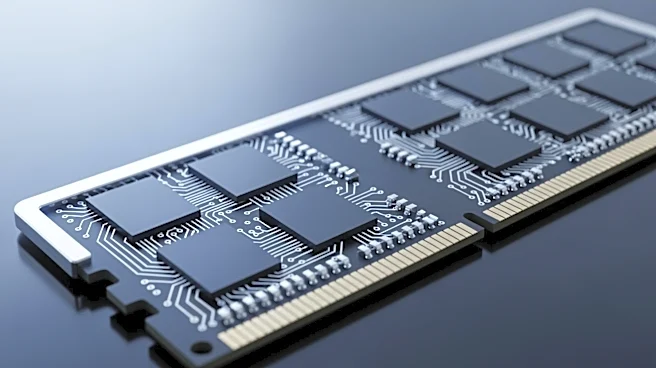
The semiconductor market has experienced a significant revenue increase, reaching $319 billion in the first quarter of 2026, marking a 27% growth from the previous quarter. This surge is primarily driven by the memory sector, with dynamic random-access
memory (DRAM) and NAND flash memory revenues nearly doubling. The demand for artificial intelligence (AI) applications has significantly impacted these markets, leading to a sharp rise in average selling prices. According to Omdia, this growth represents the highest quarter-over-quarter increase since they began tracking the market in 2002. The semiconductor industry has now seen three consecutive quarters of double-digit revenue growth, with expectations for this trend to continue into the second quarter of 2026.
Why It's Important?
The robust growth in the semiconductor market underscores the increasing demand for memory components driven by AI and data center applications. This trend highlights the critical role of semiconductors in supporting technological advancements and economic growth. The significant revenue share of DRAM and NAND, now over 40% of the total semiconductor market, indicates a shift in market dynamics, emphasizing the importance of these components in the tech industry. The continued growth in this sector could lead to further investments and innovations, potentially impacting global supply chains and economic policies related to technology and manufacturing.
What's Next?
As the semiconductor market continues to expand, stakeholders anticipate ongoing revenue growth in the coming quarters. The sustained demand for AI and data center applications is expected to drive further increases in memory prices and revenues. However, supply constraints and technological transitions may pose challenges to maintaining this growth trajectory. Industry players and policymakers will likely focus on addressing these supply issues to capitalize on the market's momentum. Additionally, the potential for geopolitical tensions and trade policies could influence the semiconductor industry's future landscape.