




What's Happening?
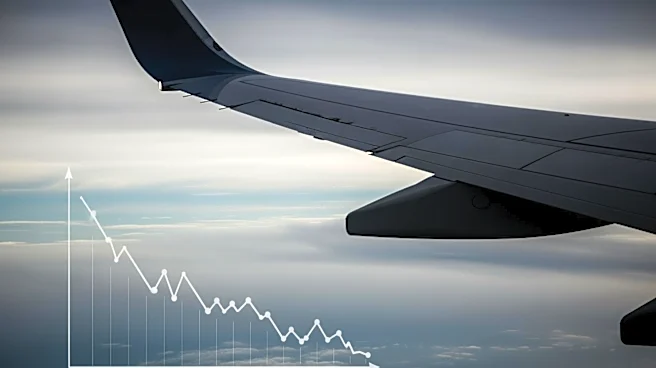
The International Air Transport Association (IATA) has revised its profit forecast for the global airline industry, predicting a dramatic drop from $45 billion to $23 billion. This revision is attributed to rising costs, particularly in fuel, which is expected
to be 70% more expensive than initially anticipated. The ongoing Iran war and a shift in global trade dynamics have exacerbated the situation, leading to increased operational costs for airlines. IATA's Chief Economist, Marie Owens Thomsen, highlighted the impact of the oil and refining crisis on the industry. Despite these challenges, demand for air travel remains strong, with passenger traffic expected to grow by 2.1% in 2026. However, airlines are facing additional costs due to delayed aircraft and engine deliveries, which are affecting efficiency gains and lease rates.
Why It's Important?
The revised profit forecast by IATA underscores the financial pressures facing the airline industry amid geopolitical tensions and rising fuel costs. The significant increase in operational expenses could lead to higher ticket prices as airlines attempt to pass on these costs to consumers. This situation poses a challenge for airlines, particularly those with weaker financial positions, as they strive to maintain profitability. The industry's reliance on sustainable aviation fuels (SAF) is also highlighted, with production needing to increase significantly to meet future targets. The current environment may drive airlines to explore alternative strategies to manage costs and improve operational efficiency, potentially leading to industry-wide changes in business models and fuel sourcing.
What's Next?
Airlines are expected to continue adjusting their operations to cope with rising costs, including implementing fuel surcharges and optimizing routes. The industry will likely focus on increasing SAF production to meet long-term sustainability goals. IATA's forecast suggests that airlines will need to navigate these challenges while maintaining service levels and customer satisfaction. The ongoing geopolitical situation and its impact on fuel prices will be closely monitored, as any resolution could alter the industry's financial outlook. Additionally, the delayed delivery of aircraft and engines will require airlines to manage their fleets strategically to minimize disruptions and maintain capacity.