
What's Happening?
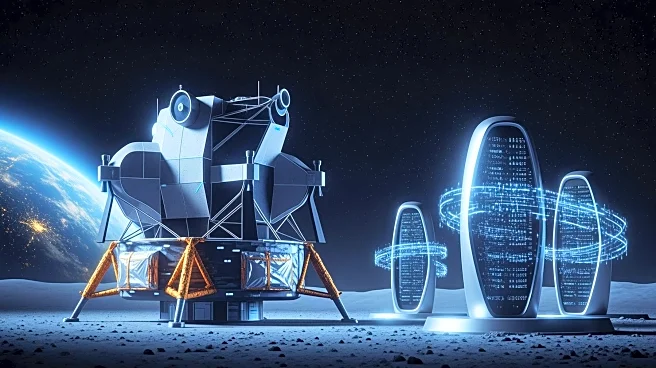
Elon Musk's SpaceX has announced a strategic pivot from its Mars colonization plans to focus on establishing a 'self-growing city' on the moon. This decision is driven by the potential for lunar development
to be achieved more quickly, with a target of less than ten years. The shift aligns with SpaceX's broader strategy to enhance its space-based data centers, which are considered more energy-efficient than terrestrial ones, especially as demand for computing power increases with AI advancements. SpaceX's move comes amidst intense competition with China in the race to return humans to the moon. Additionally, SpaceX is planning a public offering later this year, potentially raising up to $50 billion, which could be the largest in history. This development follows SpaceX's acquisition of xAI, an artificial intelligence company, further integrating Musk's ventures.
Why It's Important?
The decision to prioritize lunar development over Mars has significant implications for the space industry and international space competition. By focusing on the moon, SpaceX aims to secure a strategic advantage in space-based infrastructure, which could revolutionize data management and energy efficiency. This move also positions SpaceX as a key player in the burgeoning space economy, potentially influencing global space policy and collaboration. The planned public offering could provide substantial capital to support these ambitious projects, impacting investors and the financial markets. Furthermore, the integration of AI through the acquisition of xAI suggests a future where space exploration and artificial intelligence are increasingly intertwined, potentially leading to new technological breakthroughs.
What's Next?
SpaceX's focus on the moon is expected to accelerate developments in lunar technology and infrastructure. The company plans to attempt an uncrewed lunar landing by March 2027, which could pave the way for future manned missions. As SpaceX progresses, it may face regulatory and geopolitical challenges, particularly in light of international competition. The public offering, if successful, will provide the necessary funding to advance these projects. Meanwhile, SpaceX's continued development of Starlink and its integration with AI could lead to new services and applications, further expanding its market reach. Stakeholders, including governments and private enterprises, will likely monitor these developments closely, as they could redefine the landscape of space exploration and technology.