



What's Happening?
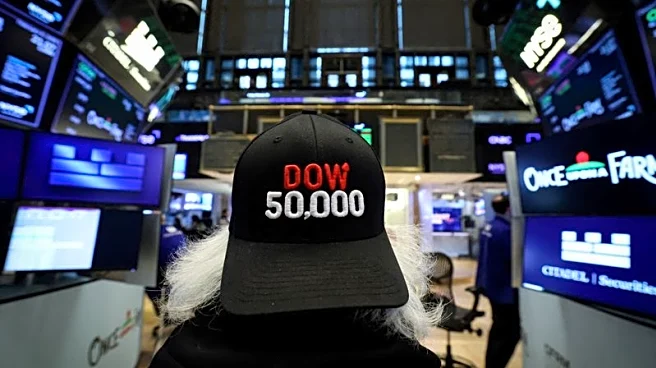
U.S. stock markets experienced volatility as oil prices continued to rise due to uncertainties surrounding the ongoing conflict in the Middle East. The S&P 500 index fell by 0.4%, while the Dow Jones Industrial Average saw a slight increase of 49 points.
The Nasdaq composite dropped by 0.7%. The fluctuations were driven by concerns over the disruption of oil and natural gas flows from the Persian Gulf, which could lead to increased inflation. President Trump announced progress in negotiations to end military operations in Iran but also issued threats to Iranian power plants if a deal is not reached. The mixed signals have left investors cautious, with some looking for opportunities to buy stocks at lower prices.
Why It's Important?
The instability in the stock markets reflects broader economic concerns related to the Middle East conflict. Rising oil prices can lead to higher inflation, affecting consumer prices and economic growth. The uncertainty also impacts investor confidence, potentially leading to reduced investment and slower economic recovery. The situation underscores the interconnectedness of global events and their impact on U.S. financial markets. Businesses and consumers could face higher costs, while policymakers may need to address inflationary pressures and economic stability.
What's Next?
Investors and market analysts will closely monitor developments in the Middle East and any announcements from President Trump regarding the conflict. The Federal Reserve's response to rising oil prices and potential inflation will also be a key focus, as interest rate adjustments could influence economic conditions. Companies may need to adjust their strategies to cope with fluctuating market conditions, while consumers could see changes in prices for goods and services. The resolution of the conflict and stabilization of oil prices will be critical for restoring market confidence.