


What's Happening?
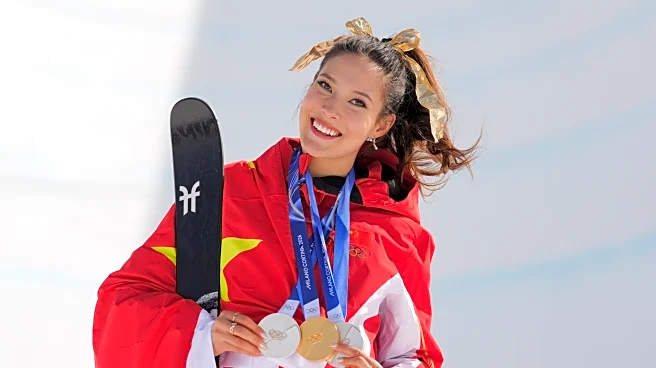
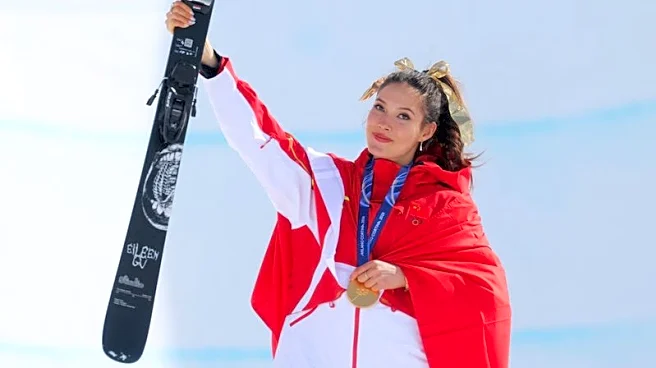
Eileen Gu has made Olympic history by becoming the second athlete to win a gold or silver medal in each of her first six events at the Winter Games. Gu achieved this milestone with a gold medal performance in the women's freeski halfpipe, scoring 94.75
on her final run. This victory marks her as the only woman to defend her freeski halfpipe title. At 22, Gu has accumulated three gold and three silver medals across two Olympic Games. Despite being born and raised in California, Gu represents China in the Olympics, a decision she attributes to honoring her mother's Chinese heritage. Her choice has sparked criticism, but Gu remains focused on her achievements.
Why It's Important?
Eileen Gu's accomplishments highlight the growing influence of athletes who represent countries other than their birth nations, reflecting broader global dynamics in sports. Her success brings attention to the sport of freestyle skiing and may inspire increased participation and interest in winter sports. Additionally, Gu's decision to represent China underscores the complex interplay of cultural identity and national representation in international sports. Her achievements also emphasize the potential for athletes to become influential figures beyond their sports, as Gu is reportedly the highest-paid Winter Olympic athlete, earning significant income through endorsements.
What's Next?
Eileen Gu's continued success may lead to further opportunities in both sports and commercial ventures. Her influence could encourage more athletes to explore representing different countries, potentially reshaping national team compositions. As Gu continues her career, her performance and public persona will likely remain under scrutiny, particularly regarding her dual cultural identity. The sports community and sponsors will be watching her next moves closely, as her decisions could impact future sponsorship deals and her role as a global sports ambassador.
Beyond the Headlines
Eileen Gu's story raises questions about the role of national identity in sports and the pressures athletes face when representing countries with which they have cultural ties. Her case highlights the broader trend of athletes navigating complex personal and professional landscapes, balancing national pride with personal heritage. This situation also reflects the increasing globalization of sports, where athletes' decisions can have significant cultural and political implications.