
What's Happening?
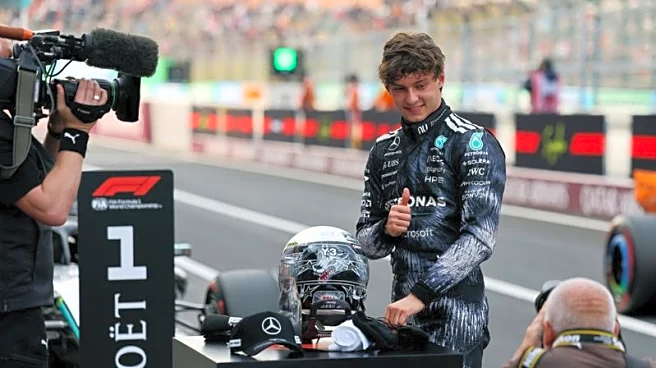
Oliver Bearman, a driver for Haas, was involved in a significant crash during the Japanese Grand Prix. The incident occurred while Bearman was competing for 17th place against Alpine's Franco Colapinto. On lap 21, Bearman lost control of his vehicle at
the Spoon Curve, resulting in a high-speed collision with the barrier after veering off onto the grass. Despite the severity of the crash, Bearman was able to exit the car with assistance from marshals. An X-ray conducted at the track's medical center confirmed that Bearman did not suffer any fractures, although he did sustain a right knee contusion. The crash led to the deployment of a Safety Car, which altered the race dynamics, allowing Kimi Antonelli to take the lead.
Why It's Important?
The incident highlights the inherent risks associated with Formula 1 racing, emphasizing the importance of safety measures and quick medical response. Bearman's ability to avoid serious injury underscores the effectiveness of current safety protocols in the sport. The crash also had immediate competitive implications, as the Safety Car deployment changed the race's outcome, affecting the strategies and positions of other drivers. This event serves as a reminder of the unpredictable nature of motorsport and the critical role of safety technology in protecting drivers.
What's Next?
Looking ahead, the Formula 1 season will continue with the Miami Grand Prix scheduled for May 1-3. This event will be the second Sprint weekend of the season, offering teams and drivers another opportunity to compete under different race conditions. For Bearman and the Haas team, the focus will likely be on recovery and preparation for the upcoming races, ensuring that both the driver and the car are in optimal condition. The incident may also prompt discussions within the team and the broader F1 community about further enhancing safety measures.