
What's Happening?
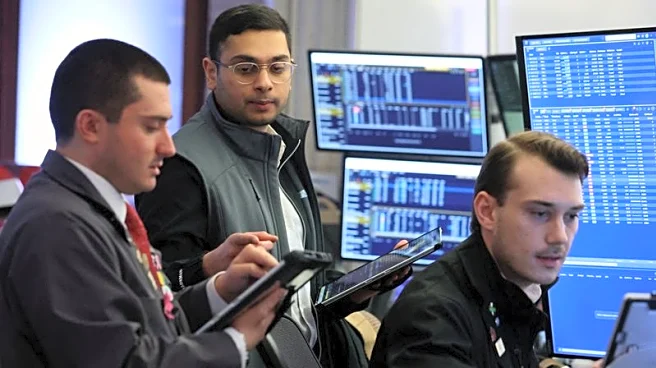
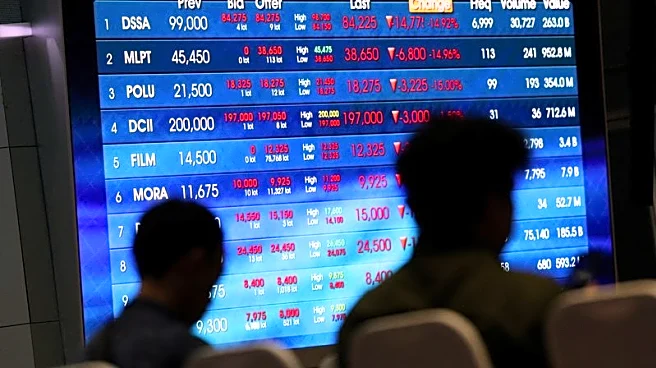
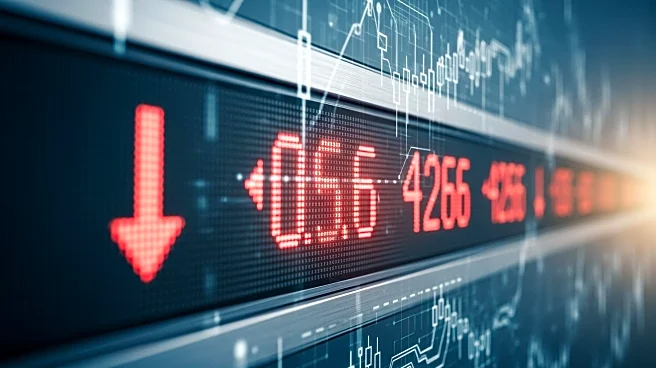
U.S. stock index futures experienced a decline as concerns over artificial intelligence (AI) impacted technology stocks, with the Nasdaq facing its steepest monthly drop since March 2025. Investors are also focused on key inflation data expected later
in the day. The technology sector has been particularly volatile due to apprehensions about the payoff from significant investments in AI technology. Additionally, market volatility has been exacerbated by tariff uncertainties following the U.S. Supreme Court's decision to void most of the duties imposed by President Trump last year. In response, President Trump announced a temporary global tariff of 10%, which took effect on Tuesday. Notably, Nvidia saw a slight increase in premarket trading despite a previous session drop, indicating ongoing risk sentiment issues related to AI.
Why It's Important?
The decline in U.S. stock futures highlights the broader market's sensitivity to technological advancements and policy changes. The AI sector, while promising, presents uncertainties that can lead to significant market fluctuations. The temporary global tariff introduced by President Trump adds another layer of complexity, potentially affecting international trade relations and economic stability. These developments could influence investor confidence and impact the strategic decisions of companies heavily invested in AI and international markets. The outcome of these economic and policy shifts will be crucial for stakeholders across various sectors, including technology, manufacturing, and international trade.
What's Next?
Investors and market analysts will closely monitor the upcoming inflation data, which could provide insights into the Federal Reserve's future interest rate decisions. The response to President Trump's tariff policy will also be pivotal, as it may lead to adjustments in international trade strategies. Companies in the technology sector may need to reassess their AI investment strategies to mitigate risks associated with market volatility. Additionally, the broader economic implications of these developments could prompt discussions among policymakers and industry leaders regarding the balance between innovation and economic stability.