


What's Happening?
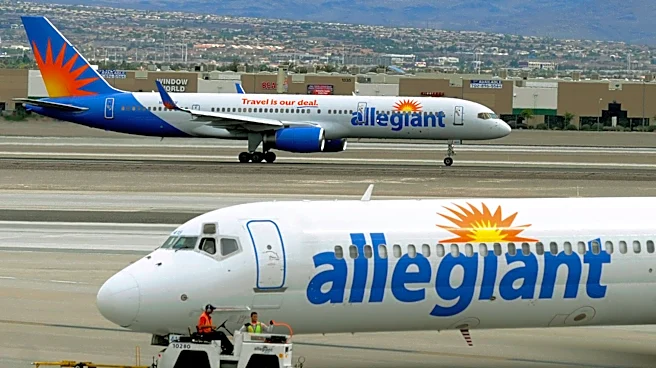
Allegiant Air and Sun Country Airlines have finalized a merger valued at approximately $1.5 billion. Despite the merger, both airlines will continue to operate under their respective brands until they are fully integrated under the Allegiant name within
the next 18-24 months. This merger positions Allegiant as the eighth largest U.S. airline by seat capacity, according to data from aviation analytics firm Cirium. The merger is part of a broader trend of consolidation in the U.S. airline industry, with other major airlines like United and JetBlue also exploring potential mergers. The combined airline will operate a fleet of 195 aircraft, serving nearly 175 cities, and will include Sun Country's air cargo operations for Amazon Prime Air.
Why It's Important?
The merger between Allegiant and Sun Country Airlines is significant as it consolidates the leisure travel market, potentially leading to more competitive pricing and expanded route options for consumers. By becoming the eighth largest U.S. airline, Allegiant strengthens its market position, which could influence pricing strategies and service offerings in the leisure travel sector. The merger also reflects a broader trend of consolidation in the airline industry, which may lead to fewer but larger players dominating the market. This could impact competition, potentially affecting ticket prices and service quality. Additionally, the merger's timing, amid discussions of other potential airline mergers, suggests a strategic move to capitalize on market opportunities and fill gaps left by the recent collapse of Spirit Airlines.
What's Next?
In the coming months, Allegiant and Sun Country will work towards integrating their operations, loyalty programs, and branding under the Allegiant name. This process is expected to take up to two years. During this period, the airlines will likely focus on streamlining operations and maximizing efficiencies to leverage their expanded network. The merger may prompt reactions from competitors, potentially leading to further consolidation in the industry. Regulatory scrutiny could also play a role, as authorities assess the impact of such mergers on market competition and consumer choice. Stakeholders, including passengers and industry analysts, will be watching closely to see how the merger affects service offerings and pricing in the leisure travel market.