



What's Happening?
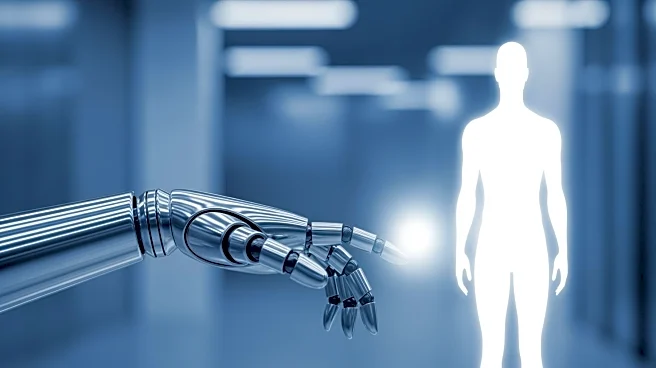
Hyundai Motor Group has announced a comprehensive AI Robotics Strategy at the Consumer Electronics Show (CES) 2026, aimed at advancing human-robot collaboration. The strategy, themed 'Partnering Human Progress', focuses on integrating human-centered AI Robotics into various industries, starting with manufacturing. The initiative is supported by three foundational partnerships: collaborating with co-working robots to assist humans in hazardous tasks, partnering with Boston Dynamics to create a robust AI Robotics value chain, and working with global AI leaders to drive innovation. The Group plans to leverage its extensive value chain and product portfolio to lead the Physical AI industry, which involves using hardware to collect data and make
autonomous decisions in real-world environments.
Why It's Important?
This strategic move by Hyundai Motor Group signifies a significant shift towards integrating AI and robotics into everyday industrial processes, potentially transforming manufacturing and other sectors. By focusing on human-centered robotics, the Group aims to reduce the physical burden on workers and enhance safety by automating high-risk tasks. This could lead to increased efficiency and productivity in industries, as well as open new markets for robotics technology. The collaboration with Boston Dynamics and other AI leaders positions Hyundai as a key player in the global AI Robotics landscape, potentially influencing future developments in smart factories and autonomous systems.
What's Next?
Hyundai Motor Group plans to establish the Hyundai Motor Group Physical AI Application Center to further develop the Physical AI ecosystem. The Group also intends to build a robot manufacturing and foundry plant, utilizing customized robotics technologies. These steps are expected to accelerate the commercialization of AI Robotics and expand the Group's offerings in Robotics-as-a-Service (RaaS). The ongoing partnerships and technological advancements will likely lead to further innovations in AI Robotics, impacting various sectors and potentially setting new standards for human-robot collaboration.