






What's Happening?
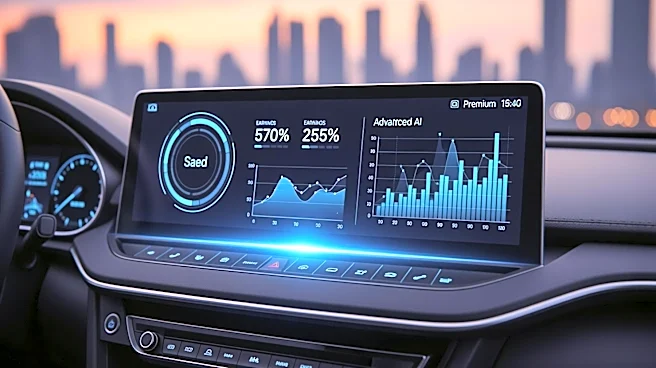
Lyft has launched a new AI tool called Earnings Assistant, designed to help drivers maximize their earnings by providing strategic tips on where and when to drive. This tool aims to assist both new and experienced drivers in navigating the competitive
ride-hailing industry, where income is typically earned per trip. The Earnings Assistant features two main components: plan guidance and real-time guidance. Plan guidance offers advice on optimal locations and times for driving, particularly beneficial for new drivers. Real-time guidance, still in testing, pinpoints areas with high demand for rides. Lyft's initiative reflects its strategy to leverage AI for enhancing driver income, a move mirrored by its competitor Uber, which is also testing similar AI features.
Why It's Important?
The introduction of AI-driven tools like Lyft's Earnings Assistant is significant as it addresses the challenges faced by ride-hailing drivers in maximizing their earnings. By providing personalized recommendations based on real-time data, the tool can potentially increase driver efficiency and income. This development is crucial in a market where drivers often juggle multiple platforms like Lyft and Uber to optimize their earnings. The competitive nature of the ride-hailing industry means that such technological advancements could become a key differentiator for companies seeking to attract and retain drivers. Additionally, the use of AI in this context highlights a broader trend of integrating advanced technologies to solve practical problems in gig economy sectors.
What's Next?
Lyft plans to expand the capabilities of the Earnings Assistant tool, potentially incorporating features that automatically alert drivers to nearby events or weather conditions that could affect ride demand. This proactive approach could further enhance driver earnings by providing timely and relevant information. As Lyft continues to refine and test these features, the company may also explore additional AI-driven solutions to improve the driver experience. The success of these initiatives could influence similar strategies across the ride-hailing industry, prompting other companies to adopt or develop comparable technologies to remain competitive.