



What's Happening?
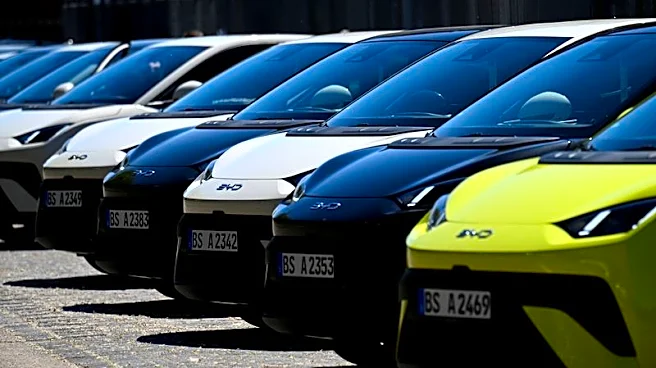
Ford CEO Jim Farley has expressed concerns about the potential impact of Chinese electric vehicles (EVs) entering the U.S. market. In a recent interview, Farley described Chinese EV brands as an 'existential threat' to U.S. automakers, including Ford.
He highlighted China's capacity to produce over 50 million vehicles, which could cover all U.S. vehicle sales. Farley emphasized the economic implications, noting that manufacturing is the 'heart and soul' of the U.S. economy. He also raised concerns about the 'cyber and privacy' risks associated with Chinese EVs, which often include multiple data-collecting cameras. Despite these challenges, Ford is focusing on its new Universal EV (UEV) platform to produce affordable EVs, aiming to remain competitive globally.
Why It's Important?
The entry of Chinese EVs into the U.S. market could significantly disrupt the domestic auto industry. With China's vast production capacity, U.S. automakers may face increased competition, potentially leading to job losses and economic shifts in manufacturing hubs. The situation underscores the need for U.S. companies to innovate and adapt to maintain their market positions. Additionally, the concerns about data privacy and cybersecurity highlight the broader implications of integrating foreign technology into critical infrastructure. Ford's strategy to develop competitive EVs domestically reflects a proactive approach to these challenges, aiming to secure its market share while addressing potential security concerns.
What's Next?
Ford plans to launch its first vehicle based on the UEV platform, a mid-size electric pickup, in 2027. This move is part of a broader strategy to produce affordable EVs at scale, leveraging lithium iron phosphate batteries from its Michigan plant. The company's efforts to innovate and compete with Chinese brands will be crucial in determining its future success. Meanwhile, the U.S. government may continue to evaluate policies regarding foreign EVs, balancing economic interests with national security concerns. The outcome of these developments could shape the future landscape of the U.S. auto industry.