


What's Happening?
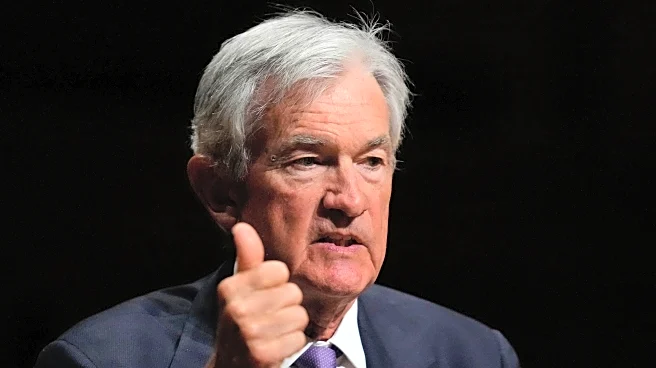
Federal Reserve Chair Jerome Powell addressed the complex issue of managing inflation and economic growth during a speech at Harvard University. As the Iran war continues and U.S. gasoline prices rise, Powell discussed the Fed's approach to balancing
inflationary pressures with economic stability. The central bank recently left interest rates steady, reflecting a cautious stance amid geopolitical tensions and tariff-driven inflation. Powell emphasized the importance of monitoring inflation expectations and the potential impact of supply shocks on the economy. The Fed's policy stance remains broadly neutral, allowing it to respond to evolving economic conditions.
Why It's Important?
Powell's remarks highlight the Fed's strategic approach to navigating economic challenges. The central bank's ability to balance inflation and growth is critical in maintaining economic stability. Rising energy prices and geopolitical tensions add complexity to monetary policy decisions. Powell's emphasis on monitoring inflation expectations underscores the importance of maintaining market confidence and preventing inflation from spiraling. The Fed's cautious approach reflects the need to balance short-term shocks with long-term economic goals.
What's Next?
The Fed will continue to monitor economic indicators and adjust its policy as necessary. The ongoing Iran war and its impact on energy prices will be key factors in future policy deliberations. The central bank's ability to communicate its strategy effectively will be crucial in managing market expectations and ensuring economic resilience.