
What's Happening?
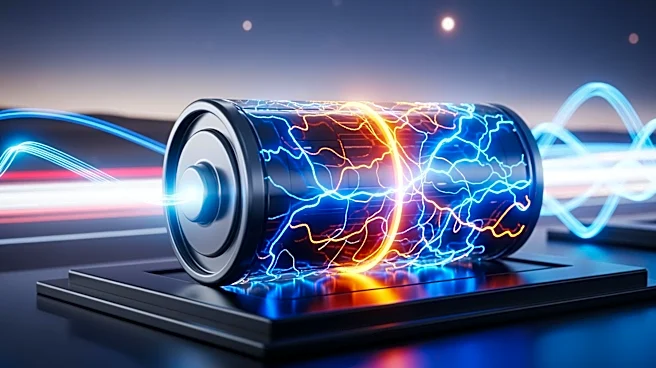
Gotion, a Chinese company backed by Volkswagen Group, has announced the production of new sodium-ion batteries with an energy density of up to 261 Wh/kg. These batteries are designed for applications in light
electric vehicles and drones, particularly within the 'low-altitude economy.' The company introduced three versions of its sodium battery at the 15th Global Technology conference, each tailored for different uses: a high-energy version for weight-sensitive applications, a power version for ultra-low temperature environments, and an energy storage version with a long cycle life. Despite the technological advancements, Gotion's plans to establish a battery factory in Michigan were thwarted due to local opposition, reflecting broader concerns about foreign ownership and influence.
Why It's Important?
The development of sodium-ion batteries by Gotion represents a significant advancement in battery technology, offering a potential alternative to lithium-ion batteries. These batteries are less costly, have a reduced risk of fires, and perform better in cold weather, which could make them attractive for various industries, including transportation and energy storage. The backing by Volkswagen suggests a strategic interest in integrating these batteries into future electric vehicles, potentially reshaping the market dynamics. However, the resistance to Gotion's expansion in the U.S. highlights ongoing geopolitical tensions and the challenges foreign companies face in entering the American market.
What's Next?
As Gotion continues to develop its sodium-ion battery technology, the company may seek alternative locations for manufacturing outside the U.S. The potential integration of these batteries into Volkswagen's electric vehicles could accelerate their adoption in the automotive industry. Additionally, the ongoing advancements in sodium-ion technology may prompt other companies to explore similar innovations, potentially leading to a broader shift in the energy storage sector.
Beyond the Headlines
The resistance to Gotion's factory in Michigan underscores the complex interplay between technological innovation and geopolitical concerns. The reluctance to accept foreign investment in critical industries like battery manufacturing reflects broader national security and economic sovereignty issues. This situation may influence future policy decisions regarding foreign investments and collaborations in the U.S., particularly in sectors deemed strategically important.