


What's Happening?
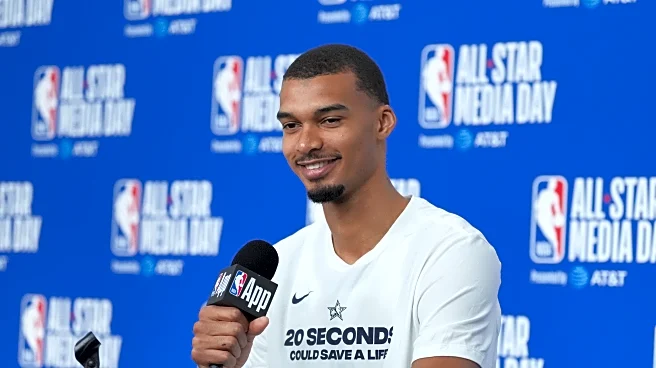
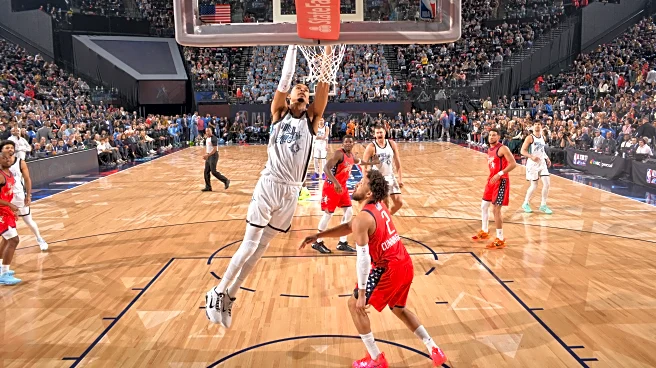
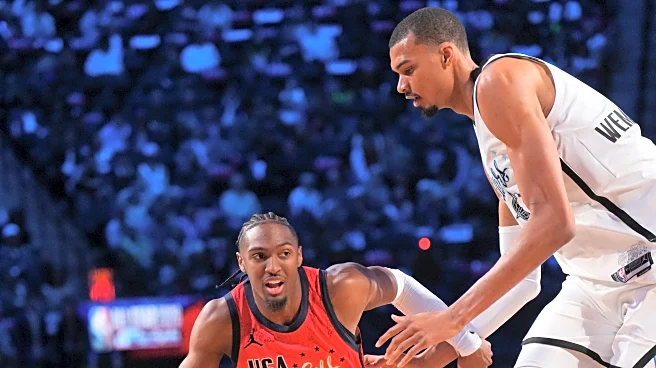
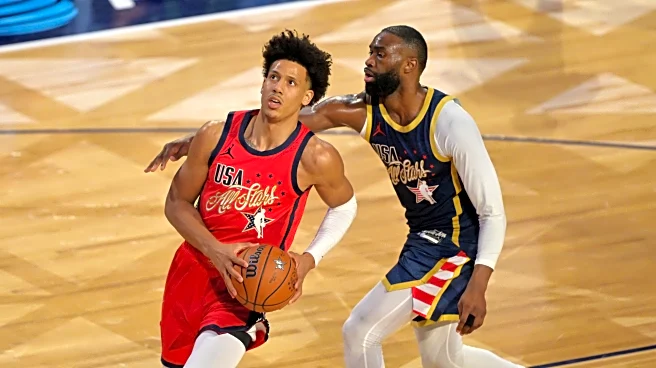
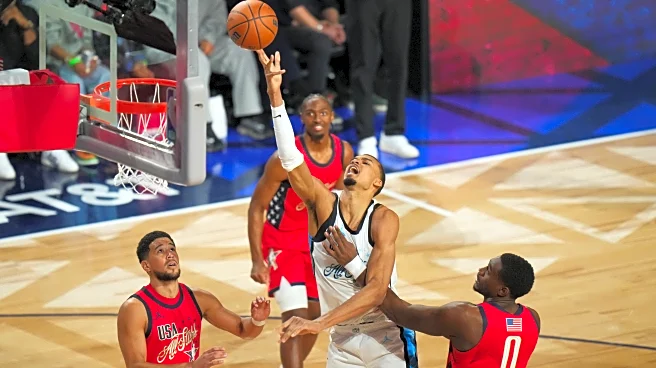
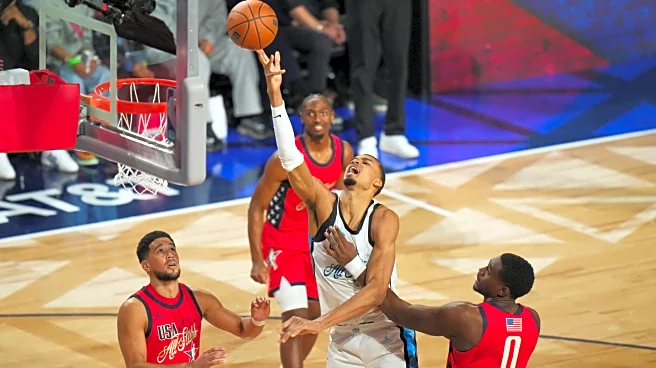
The 2026 NBA All-Star Game introduced a new format featuring two USA teams and one World team, resulting in a more competitive event. Victor Wembanyama, a standout player, was credited with setting the tone for the game, which saw increased intensity and engagement from players. The format included each team playing each other in 12-minute quarters, leading to exciting matchups and strategic play. Anthony Edwards of the Timberwolves was named All-Star Game MVP, highlighting the competitive spirit of the event. The format change was well-received, with players like Jalen Brunson praising Wembanyama's leadership and impact.
Why It's Important?
The success of the new format revitalizes the NBA All-Star Game, which had been criticized for lackluster performances in
recent years. By increasing competitiveness, the format enhances viewer engagement and player participation, potentially setting a precedent for future All-Star events. The involvement of international players like Wembanyama underscores the global nature of the NBA and its appeal. This change could influence how other sports leagues approach their showcase events, emphasizing the importance of innovation in sports entertainment.
What's Next?
The NBA may consider retaining or further refining the new All-Star Game format based on its success. Feedback from players and fans will likely influence future decisions. The league might explore additional ways to enhance the All-Star Weekend, balancing tradition with innovation. The performance of players like Wembanyama could impact their roles in upcoming NBA seasons, as well as their marketability and influence within the league.