






What's Happening?
Artificial intelligence (AI) is significantly transforming the agricultural sector by introducing precision agriculture and automation. As the global population is expected to reach nearly 10 billion by 2050, the Food and Agriculture Organization of the United
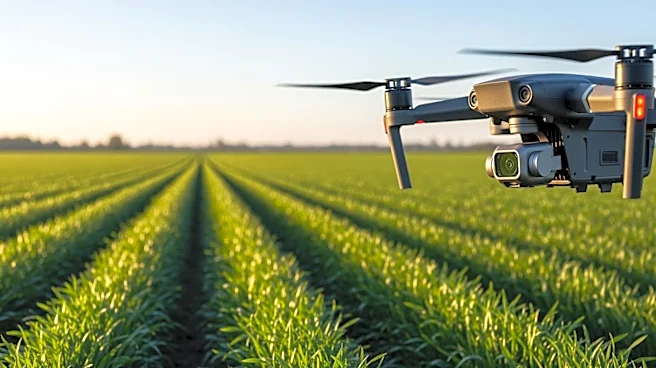
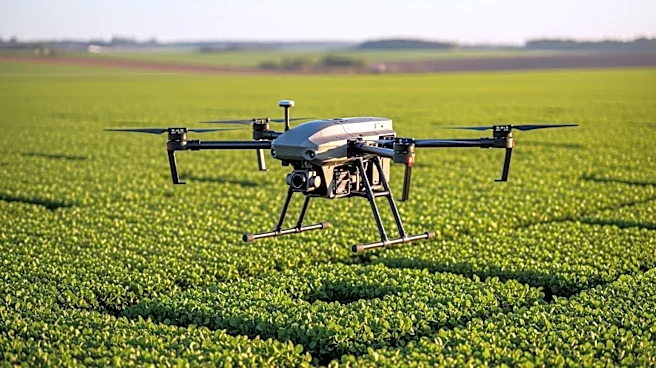
Nations estimates that food production must increase by at least 70% to meet demand. AI technologies, such as AI-powered sensors and satellite imagery, allow farmers to monitor crop health at a granular level, enhancing precision in farming practices. The market for AI in agriculture is projected to grow from $1.7 billion in 2023 to $4.7 billion by 2028, according to MarketsandMarkets. AI-driven 'see-and-spray' technology can reduce herbicide use by up to 90%, benefiting both farmers and local ecosystems. Additionally, AI models provide predictive analytics for optimal planting windows and early detection of pests and diseases, helping farmers manage risks associated with volatile weather conditions.
Why It's Important?
The integration of AI in agriculture is crucial for addressing the challenges of increasing food demand without depleting Earth's resources. By enhancing precision and efficiency, AI helps reduce resource wastage and operational costs, making farming more sustainable. The ability to predict and manage risks associated with weather and pest outbreaks can significantly reduce crop losses and financial risks for farmers. Furthermore, AI-driven automation addresses labor shortages in agriculture, as noted by the American Farm Bureau Federation, by enabling continuous operations through robotics and autonomous machinery. This technological shift not only supports food security but also promotes economic stability in the agricultural sector.
What's Next?
As AI continues to be integrated into agriculture, further advancements in technology are expected to enhance its capabilities. The development of more sophisticated AI models and tools could lead to even greater efficiencies and cost savings. Stakeholders in the agricultural industry, including policymakers and technology developers, may focus on expanding AI adoption and addressing any regulatory or ethical concerns associated with its use. Additionally, ongoing research and innovation in AI could lead to new applications and solutions for other challenges in agriculture, such as climate change adaptation and resource management.