



What's Happening?
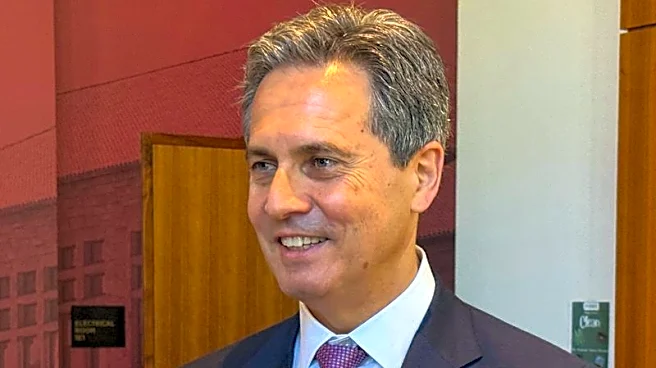
Federal Reserve Vice Chair for Supervision Michelle Bowman has indicated that the ongoing conflict in the Middle East could lead to persistent inflation, potentially prompting a shift in the Federal Reserve's monetary policy. Currently, the Federal Reserve is expected
to maintain its benchmark interest rate in the 3.50%-3.75% range at its upcoming policy meeting. However, the energy shock resulting from the conflict has raised concerns about inflationary pressures. Bowman expressed optimism that the war's end would alleviate supply disruptions and have only a temporary impact on inflation. Nonetheless, she warned that if disruptions persist, broader inflationary effects could emerge, necessitating a reevaluation of monetary policy. This comes as inflation has consistently exceeded the Fed's 2% target, complicating the central bank's ability to treat recent inflation spikes as temporary.
Why It's Important?
The potential shift in the Federal Reserve's policy due to the Middle East conflict underscores the interconnectedness of global events and domestic economic policy. Persistent inflation could lead to tighter monetary policy, affecting borrowing costs for businesses and consumers. This scenario could slow economic growth and impact labor market conditions. Financial markets are already anticipating a possible rate hike, reflecting concerns about sustained inflation. The Federal Reserve's decisions will be closely watched by economic stakeholders, as they could influence investment strategies, consumer spending, and overall economic stability. The situation highlights the challenges central banks face in balancing inflation control with economic growth, especially in the context of global geopolitical tensions.
What's Next?
The Federal Reserve's upcoming policy meeting will be crucial in determining its response to the ongoing inflationary pressures. Should the energy shock continue to drive inflation, the central bank may consider adjusting its policy stance, potentially leading to interest rate hikes. This decision will depend on the persistence of inflation and its broader economic impacts. Stakeholders, including businesses and financial markets, will be monitoring the Fed's communications for any indications of policy changes. Additionally, the resolution of the Middle East conflict could play a significant role in shaping future economic conditions and the Fed's policy decisions.