


What's Happening?
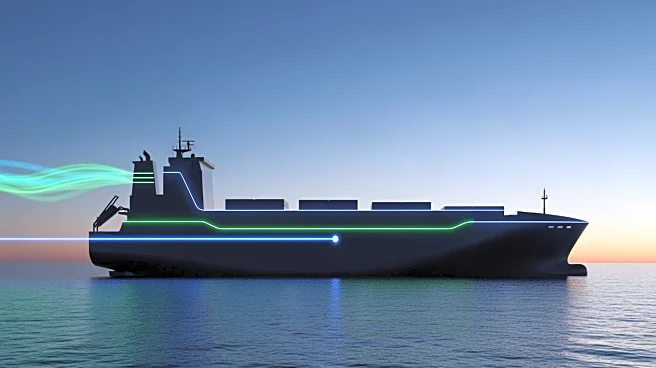
The first of three innovative cargo RoRo vessels, named Spirit of Toulouse, has been launched in China for LD Armateurs (LDA), which will operate the ships for Airbus. These vessels are designed to incorporate advanced technologies, including AI and wind-assisted propulsion, to significantly reduce emissions. LDA ordered the ships in January 2024 to support Airbus's plan to increase production of its A320 class planes. The new vessels will have the capacity to transport around 70 40-foot containers and six aircraft subassembly sets. The ships are equipped with Norsepower rotors and bi-fuel engines capable of running on e-/bio-methanol or marine diesel, aiming for a 70% annual reduction in CO2 emissions compared to previous generations.
Why It's Important?
The launch
of these low-emission vessels represents a significant advancement in sustainable maritime transport. By reducing CO2 emissions, the vessels align with global efforts to combat climate change and reduce the environmental impact of shipping. This development is crucial for Airbus as it seeks to increase production while minimizing its carbon footprint. The use of alternative fuels and advanced propulsion technologies could set a precedent for the shipping industry, encouraging other companies to adopt similar measures. The vessels' ability to optimize routes using AI further highlights the potential for technology to enhance efficiency and sustainability in maritime operations.
What's Next?
The Spirit of Toulouse will now enter the mooring and sea trial phases, undergoing comprehensive commissioning of its propulsion system and other features. The timeline for the entry into service has not been announced, but the successful implementation of these vessels could influence future shipbuilding projects. As the shipping industry faces increasing pressure to reduce emissions, the adoption of similar technologies could become more widespread. Stakeholders will be closely monitoring the performance of these vessels to assess their impact on emissions and operational efficiency.