

What's Happening?
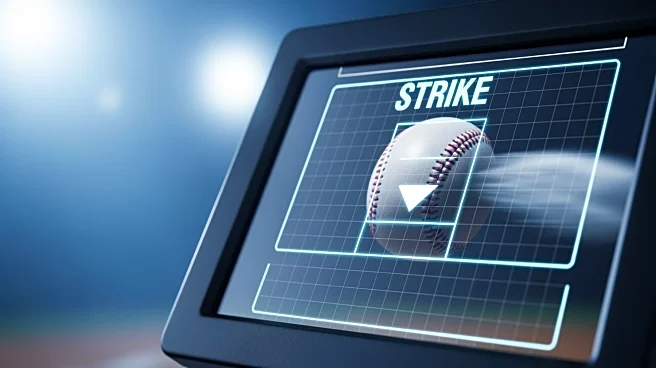
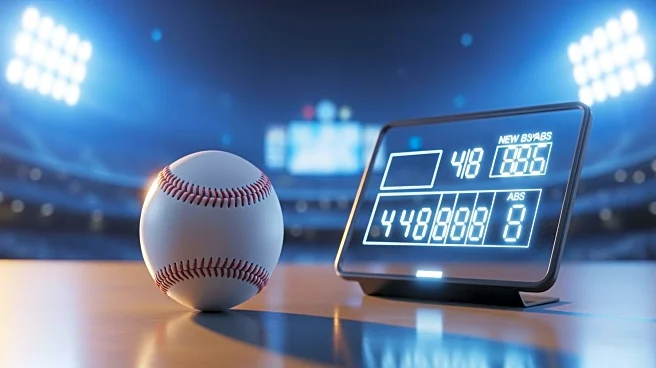
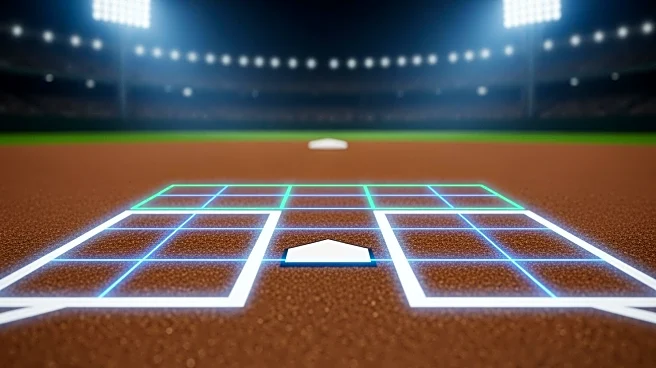
Major League Baseball (MLB) has introduced a new hand signal as part of its Automated Ball-Strike Challenge System, which allows teams to challenge ball-strike calls during games. This system, which uses cameras to track pitches and determine if they
fall within the strike zone, permits each team to challenge two calls per game. The new signal involves players patting their heads to indicate a challenge, a gesture that has quickly been adopted by fans as well. This development is part of a broader trend in sports where video review procedures have led to the creation of unique sign languages to communicate challenges and reviews. The system was tested during spring training in 2025 and is now officially part of regular season games.
Why It's Important?
The introduction of the Automated Ball-Strike Challenge System in MLB represents a significant shift towards technology-driven officiating in sports. This move aims to enhance the accuracy of game calls, potentially reducing human error and increasing fairness in the sport. For players and teams, this system provides a strategic tool to contest questionable calls, which could influence game outcomes. The adoption of such technology reflects a broader trend across various sports leagues to integrate video review systems, which can impact how games are played and officiated. This change could also affect fan engagement, as spectators become more involved in the challenge process through the use of new signals.
What's Next?
As the Automated Ball-Strike Challenge System becomes more integrated into MLB games, teams and players will likely develop strategies to effectively use their limited challenges. The league may also monitor the system's impact on game flow and make adjustments as needed. Additionally, the success of this system could lead to further technological innovations in officiating across other sports. Stakeholders, including team managers and players, will need to adapt to these changes, potentially influencing training and game preparation. The system's reception by fans and its effect on the viewing experience will also be key factors in its long-term adoption.