
What's Happening?
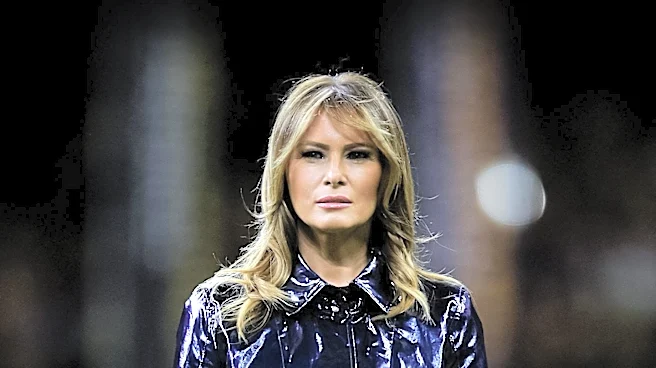
Melania Trump recently appeared at the White House Easter Egg Roll with a noticeably blonder hair color, described as 'honey blond.' This change has sparked discussions about the significance of hair color in
political circles, particularly within the MAGA movement. The trend of blond hair is prevalent among prominent figures associated with President Trump, including Ivanka Trump, Pam Bondi, and Kellyanne Conway. This specific shade of blond, often referred to as 'Palm Beach blond,' is characterized by its sunny and warm tones, requiring regular maintenance and often seen as a status symbol. The trend aligns with the luxurious aesthetic associated with the Trump administration, where opulence is a common theme.
Why It's Important?
The focus on Melania Trump's hair color highlights the broader cultural and political implications of personal appearance in public life. In the context of the MAGA movement, blond hair has become a symbolic marker, reflecting a certain image and lifestyle associated with wealth and conservative values. This trend underscores how personal aesthetics can be interpreted as political statements, influencing public perception and media narratives. The emphasis on appearance also reflects societal pressures on women in politics to maintain a certain image, which can impact their public roles and the messages they convey.
What's Next?
As the trend of MAGA-coded blond hair continues, it may influence fashion and beauty standards within conservative circles. The media's focus on such aesthetic choices could lead to further scrutiny of public figures' appearances, potentially affecting how political messages are crafted and received. Additionally, the trend may prompt discussions about the role of personal appearance in political branding and its impact on public perception.
Beyond the Headlines
The discussion around Melania Trump's hair color also touches on deeper issues of gender and power dynamics in politics. The scrutiny of women's appearances in public roles often reflects broader societal expectations and can perpetuate stereotypes about femininity and leadership. This focus on aesthetics may overshadow substantive political discourse, highlighting the need for a more nuanced understanding of how personal choices intersect with public roles.