






What's Happening?
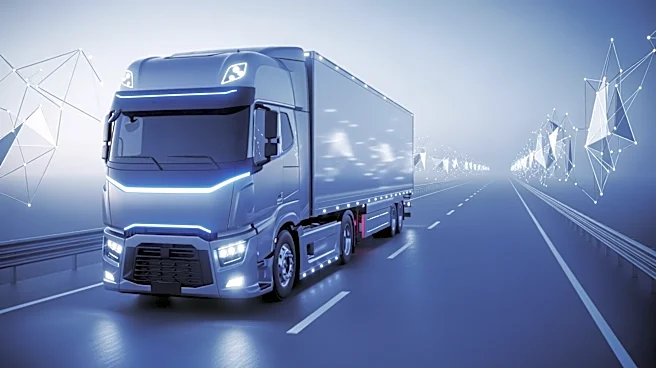
Aurora Innovation, Inc. and Volvo Autonomous Solutions have announced the expansion of their autonomous freight network with a new 200-mile route between Dallas and Oklahoma City. This development marks a significant milestone as Volvo Autonomous Solutions begins
hauling freight to customer facilities in Oklahoma City using the Volvo VNL Autonomous integrated with the Aurora Driver. The program currently supports trips five days a week in supervised autonomy, aiming to provide safer, quicker, and more efficient movement of goods. This expansion allows Volvo Autonomous Solutions to reduce the need for drayage moves and additional handoffs, simplifying logistics flows. The initiative is part of a broader strategy to scale autonomous transport and demonstrates the reliability of autonomous trucks in real logistics environments.
Why It's Important?
The expansion of autonomous freight routes by Aurora and Volvo represents a significant advancement in the logistics and transportation industry. By integrating autonomous technology, the companies aim to enhance the efficiency and safety of freight transport, potentially reducing costs and increasing reliability. This development could lead to a shift in how goods are transported across the U.S., with implications for supply chain management and logistics operations. The collaboration between Aurora and Volvo also highlights the growing trend of partnerships in the autonomous vehicle sector, as companies seek to leverage each other's strengths to accelerate the adoption of new technologies.
What's Next?
As Aurora and Volvo continue to validate their driverless operations, the focus will likely be on expanding their autonomous freight network to additional routes and customer endpoints. The companies plan to build hundreds of autonomous trucks by 2027, indicating a long-term commitment to scaling their operations. Stakeholders, including logistics companies and businesses relying on freight transport, may need to adapt to the changes brought by autonomous technology. Regulatory bodies might also play a role in shaping the future of autonomous freight transport, ensuring safety and compliance with industry standards.