








What's Happening?
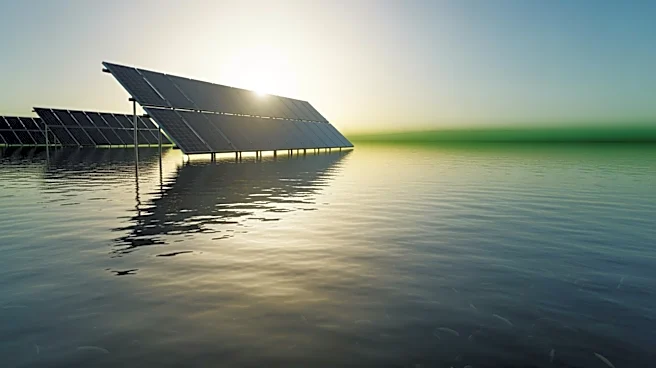
A recent study published in Communications Earth & Environment examines the potential of fishery photovoltaic complementary integration (FPCI) as a dual-use solution for generating solar energy alongside aquaculture. This approach involves installing
solar panels over fish and shrimp farming ponds, allowing for simultaneous electricity production and aquaculture. The study identifies countries like China, India, Indonesia, Egypt, and the United States as prime candidates for FPCI expansion due to their favorable solar resources and extensive aquaculture activities. The research suggests that FPCI could significantly contribute to global solar capacity and aid in achieving net-zero targets by mid-century.
Why It's Important?
The integration of solar energy with aquaculture presents a promising strategy for sustainable development, addressing land-use conflicts associated with large-scale solar projects. By utilizing existing water-based infrastructure, FPCI can enhance clean energy generation without additional land requirements, supporting both energy and food production. This approach could reduce carbon emissions and improve energy access in developing regions, fostering local economic growth. The study's findings highlight the potential for FPCI to play a crucial role in global decarbonization efforts, offering a viable solution to balance energy needs with environmental conservation.
What's Next?
The study calls for region-specific environmental planning strategies to ensure sustainable FPCI deployment. Future research should focus on assessing long-term impacts on water quality, ecosystems, and coastal environments. Addressing challenges such as ecological impacts, marine corrosion, and maintenance demands will be crucial for large-scale adoption. The study emphasizes the need for continued exploration of FPCI's economic feasibility and its integration into national energy policies to maximize its benefits.