


What's Happening?
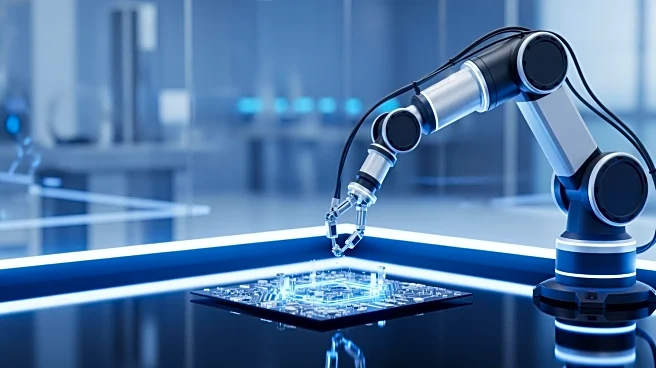
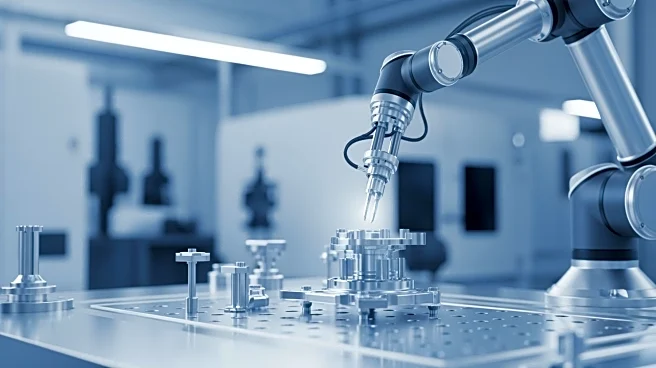
Palantir's Chief Technology Officer, Shyam Sankar, is advocating for the use of artificial intelligence (AI) to revitalize American manufacturing. In his new book, 'Mobilize,' Sankar argues that AI can significantly enhance the productivity of American workers,
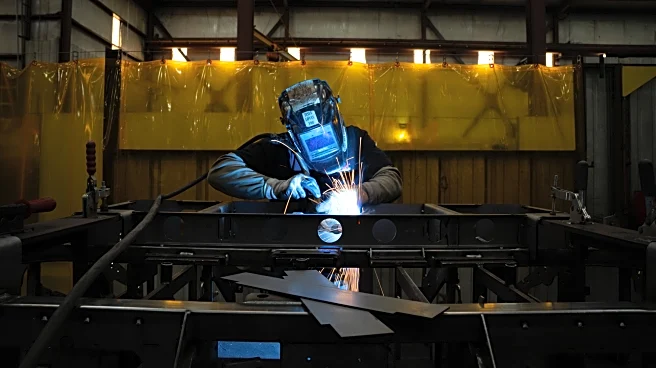
making them more competitive against automated factories in China. He suggests that AI can lead to a resurgence in U.S. manufacturing by creating more jobs on the factory floor, contrary to the belief that AI will eliminate jobs. Sankar emphasizes the importance of reshoring manufacturing to ensure national security and reduce dependency on foreign production, particularly in critical sectors like defense and pharmaceuticals. He highlights the need for a reimagined manufacturing capacity in the U.S., drawing parallels to the World War II era when American companies rapidly adapted to produce war materials.
Why It's Important?
The push for AI-driven manufacturing in the U.S. is significant as it addresses both economic and national security concerns. By enhancing productivity, AI can make American manufacturing more competitive globally, potentially reducing reliance on foreign production. This shift could lead to job creation in the manufacturing sector, countering fears of job losses due to automation. Additionally, reshoring manufacturing is crucial for national security, as it reduces dependency on foreign countries for essential goods, such as pharmaceuticals and defense materials. Sankar's vision aligns with current bipartisan efforts to bolster domestic manufacturing, as seen in initiatives like the CHIPS Act, which aims to strengthen the U.S. semiconductor industry.
What's Next?
The adoption of AI in manufacturing is expected to continue growing, with more companies likely to invest in AI technologies to enhance productivity and competitiveness. Policymakers may further support this trend by providing incentives for companies to reshore manufacturing operations. The success of AI-driven manufacturing could influence other sectors to adopt similar technologies, potentially leading to broader economic benefits. However, challenges remain, including the need for workforce training and addressing ethical concerns related to AI deployment. The ongoing geopolitical tensions and supply chain disruptions may also accelerate efforts to strengthen domestic manufacturing capabilities.