


What's Happening?
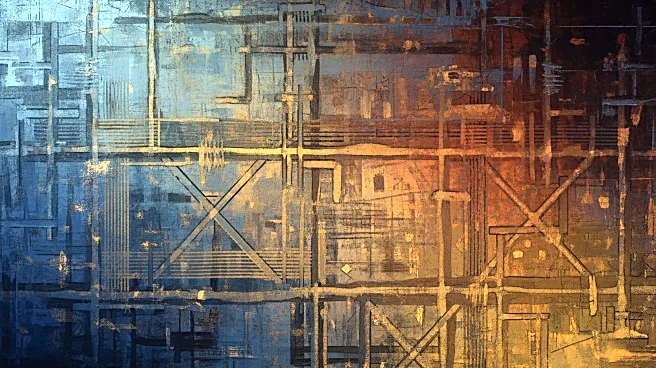
Elizabeth Neel, a contemporary painter, is showcasing her latest exhibition titled 'In the Guts of the Living' at the Jack Shainman Gallery in New York. The exhibition features a series of abstract paintings that explore the transmission and transformation
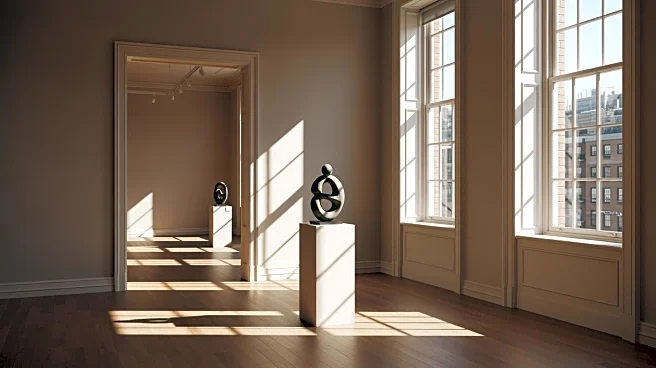
of information through art. Neel's work is characterized by a consistent color palette and abstract marks, aiming to create a sense of airiness and spontaneity. The exhibition is set in a former Beaux-Arts bank hall, which complements the historical themes of her work. Neel draws inspiration from W. H. Auden's poem 'In Memory of W. B. Yeats,' reflecting on how knowledge is passed and transformed through lived experiences.
Why It's Important?
This exhibition is significant as it highlights the intersection of art and history, offering a reflective space for viewers to consider the impact of historical narratives on contemporary life. Neel's work invites audiences to engage with art on a personal level, encouraging them to bring their own experiences and interpretations to the pieces. The setting of the exhibition in a historical building further enhances the dialogue between past and present, making it a unique cultural experience. This approach not only enriches the art world but also contributes to broader discussions on how history influences modern society.
What's Next?
The exhibition will be open to the public through early April, providing an opportunity for art enthusiasts and the general public to engage with Neel's work. As visitors interact with the paintings, they may gain new insights into the role of art in understanding and interpreting historical and contemporary issues. The gallery setting, with its historical architecture, may inspire other artists to consider similar thematic explorations in their work, potentially influencing future exhibitions and artistic collaborations.
Beyond the Headlines
Neel's exhibition also raises questions about the role of art in processing personal and collective histories. By incorporating elements of spontaneity and abstraction, her work challenges traditional narratives and invites viewers to consider the fluidity of historical interpretation. This approach may encourage a more nuanced understanding of how art can serve as a medium for exploring complex social and cultural issues, fostering a deeper appreciation for the transformative power of artistic expression.