
What's Happening?
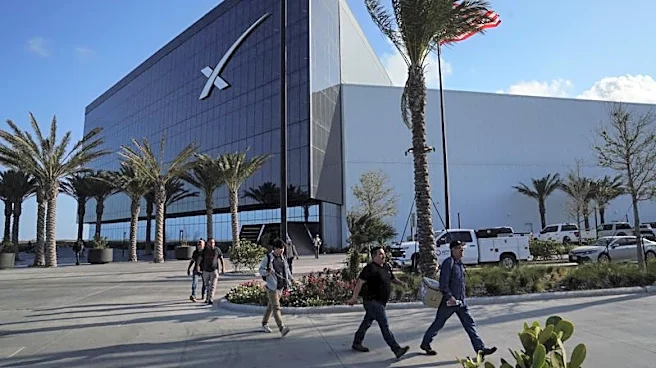
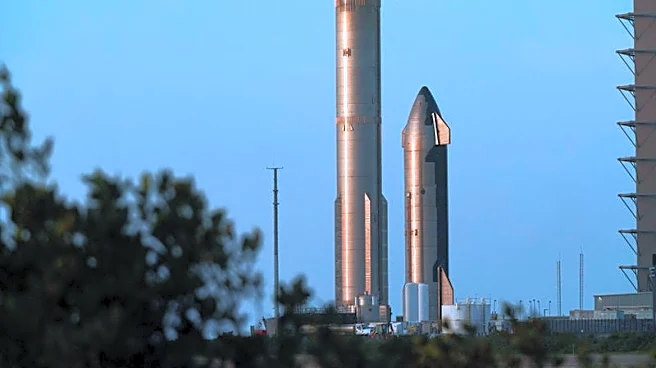
SpaceX, led by Elon Musk, is reportedly preparing for an initial public offering (IPO) that aims to raise a record $75 billion, surpassing the previous record set by Saudi Aramco in 2019. The company is in discussions with Saudi Arabia's Public Investment
Fund (PIF) for a potential $5 billion investment to secure anchor investors before the IPO. This move is part of SpaceX's strategy to prevent dilution of the PIF's stake when the company goes public. The IPO is expected to involve major financial institutions such as Bank of America, Goldman Sachs, JPMorgan Chase, and Morgan Stanley. SpaceX has confidentially filed for the IPO, targeting a valuation exceeding $2 trillion. The IPO date is speculated to be around mid-June, coinciding with Musk's birthday and a rare planetary alignment.
Why It's Important?
The potential IPO of SpaceX is significant as it could set a new benchmark in the financial markets, potentially raising more capital than any previous IPO. This move could significantly impact the aerospace and satellite internet industries, as SpaceX is a major player in these fields. The involvement of Saudi Arabia's PIF highlights the growing interest of sovereign wealth funds in high-tech and space sectors, which could lead to increased investments in similar ventures. For the U.S. economy, this IPO could attract substantial foreign investment, boosting the financial markets and potentially leading to increased innovation and competition in the aerospace sector.
What's Next?
If the IPO proceeds as planned, it could lead to a significant reshaping of the investment landscape in the aerospace industry. Major stakeholders, including financial institutions and international investors, will likely monitor the developments closely. The success of this IPO could encourage other tech companies to consider going public, potentially leading to a wave of new IPOs in the tech and aerospace sectors. Additionally, the merger of SpaceX with Musk's AI firm xAI could lead to new technological advancements, particularly in AI applications in space.