
What's Happening?
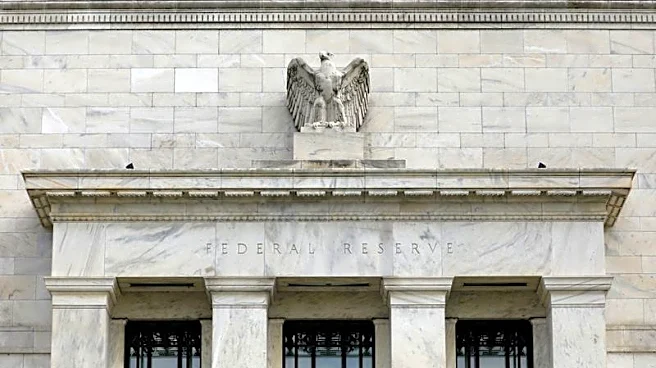
The Federal Reserve has decided to keep its benchmark interest rate unchanged in what is likely Jerome Powell's final meeting as chair. The decision was marked by a divided vote, reflecting uncertainty
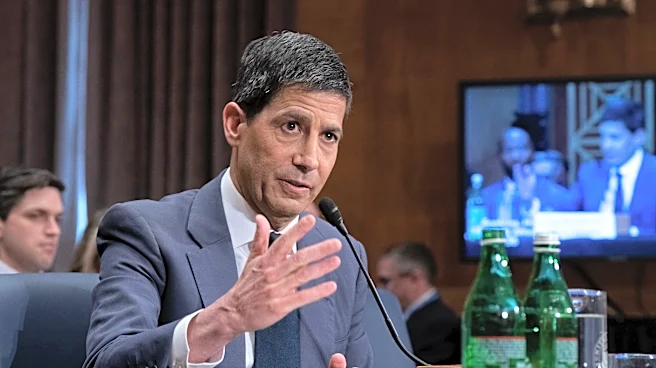
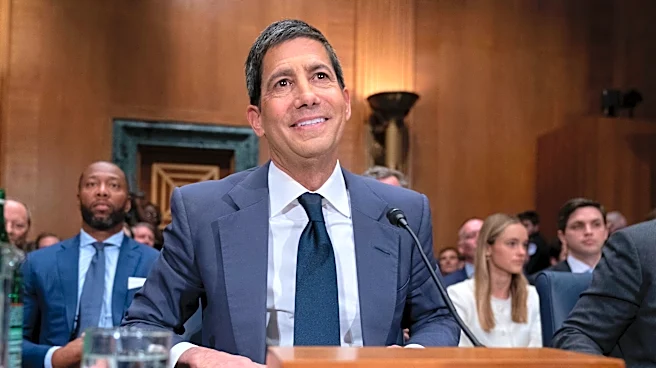
within the Fed. Kevin Warsh, nominated by President Trump to succeed Powell, has been endorsed by the Senate Banking Committee, paving the way for a full Senate vote. The decision comes amid political pressures and a recent Justice Department investigation into the Fed, which has now been dropped. Powell's future role remains uncertain, as he may choose to stay on the board to safeguard the Fed's independence.
Why It's Important?
The transition in leadership at the Federal Reserve is crucial as it could alter the central bank's approach to monetary policy. Powell's potential departure and Warsh's nomination could shift the Fed's stance on interest rates and its independence from political influence. The Fed's policies are pivotal in managing inflation and economic growth, impacting financial markets and the broader economy. The outcome of this leadership change will be closely watched by investors, policymakers, and the public for its implications on economic stability and policy direction.
What's Next?
The Senate is expected to vote on Warsh's confirmation soon, which could lead to a change in the Fed's leadership. Powell's decision on whether to remain on the board will be significant in maintaining the Fed's independence. The central bank will continue to face challenges, including inflation and geopolitical tensions, which will influence its policy decisions. Stakeholders will be looking for clarity on the Fed's future direction and its approach to managing economic risks.